7 Key Principles of Resilient Critical Infrastructure
America’s critical infrastructure is under pressure. From hostile adversaries to climate-driven disasters, the threats are growing faster than our defenses. We've built world-class cybersecurity systems, but neglected the physical layer underpinning networks, devices and essential services.
While we debate fiber versus satellite, our adversaries quietly map every vulnerable chokepoint in the system. They understand what we’ve ignored: the nervous system of modern life is built on physical infrastructure, a dangerously vulnerable foundation.
Hardening the physical backbone of American infrastructure demands more than upgrades or patchwork fixes. True resilience demands a shift in how we design, secure and sustain our critical infrastructure. The following seven principles confront America’s infrastructure blind spot and offer a path to turn our vulnerabilities into strategic advantage.
1. Physical ≠ Cyber: America's Blind Spot
We’ve mastered cybersecurity. Our digital defenses are world-class, our threat intelligence sophisticated, our response capabilities mature. But we've made a critical error: assuming cyber resilience equals infrastructure resilience.
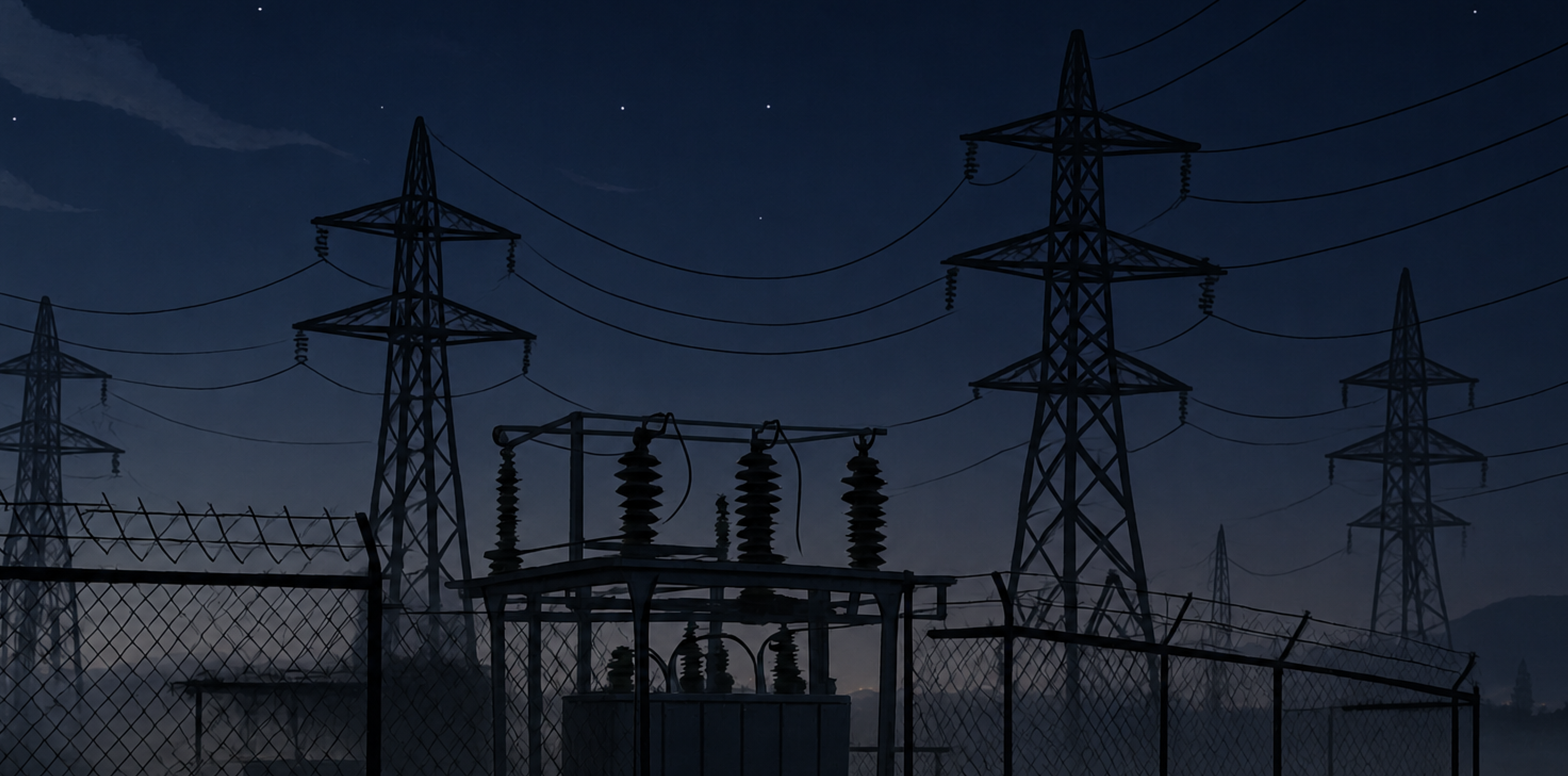
The physical layer tells a different story. Power substations sit unguarded. Fiber cables follow predictable, exposed routes. Data centers cluster in flood zones. While we've hardened our software, we've left our hardware dangerously exposed. And our adversaries have taken notice.
Attacking physical infrastructure doesn’t require elite hacking skills. Wire cutters, backhoes and a map are enough. In 2013, a small team with rifles nearly crippled power in Silicon Valley by targeting a single substation in Metcalf, California.
The Metcalf attack exposed a critical blind spot in security strategy: the physical foundation America’s digital systems depend on. We cannot defend the digital realm without securing its physical foundation.
2. Digital Twin FTW: Model Everything
Physical resilience starts with visibility. Infrastructure can’t be secured without first being modeled. Mapping the physical world into a digital twin is the first step toward infrastructure intelligence and true resilience.
Every piece of critical infrastructure should exist in two places—once in the real world, and once in a secure digital environment. A digital twin creates a parallel universe where infrastructure can be tested, simulated and planned without risking the real thing.
A digital twin should connect to real-time reporting and automated compliance. If a transformer fails in Nebraska, the model will already understand the cascading impacts and have mitigation strategies ready. When regulations change, compliance updates should apply automatically across every relevant modeled element.
GAME (Grid Asset Management Environment) and ARC (Automated Resilience Coordination) frameworks provide the backbone for a digital twin approach. GAME and ARC transform reactive maintenance into predictive orchestration, turning infrastructure management from art into science.
3. Make IXPs Commodity: The Great Multiplication
America has fewer than 10,000 legitimate multi-provider network junctions. Critical Internet Exchange Points (IXPs) are where different networks connect and exchange data. With so few IXPs, America faces bottlenecks, vulnerabilities and dangerous single points of failure.
The equation needs to flip. Instead of 10,000 IXPs, America needs 100,000. Better yet, we should target 1,000,000. Every major building, industrial facility, and municipal center should have carrier-neutral connectivity options.
The goal is to build a flexible, distributed network to keep data flowing under any conditions. When IXPs become as common as electrical outlets, the system becomes harder to break and quicker to recover.
4. The Three-Legged Stool: Transmission, Compute, Store
Engineers designed traditional infrastructure for a simpler world. One where the goal was to move data from point A to point B. Modern systems, especially ones powered by AI, need more than transmission. Compute and storage at the edge are essential.
Consider autonomous vehicles. A 100-millisecond delay from a distant data center puts safety at risk. Real-time processing must happen at the intersection, with storage in the nearest cell tower and transmission never dipping below critical thresholds.
The three-legged stool (compute, storage and transmission) must be available everywhere, not just in major metros. Rural America, industrial sites and remote installations need the full triad.
To get there, we must rethink expectations of American infrastructure. Pack compute power into every IXP. Treat every connection point as a micro–data center, not just a pass-through. A resilient future depends on putting intelligence, speed and capacity as close to the edge as possible.
5. RORI >>> ROI: Resilient Return on Investment
Traditional return on investment (ROI) calculations miss the point. ROI focuses on gains from what gets built, not losses from what doesn’t. Resilient Return on Investment (RORI) flips the logic.
RORI asks harder, more consequential questions: What becomes impossible if critical infrastructure fails? What economic activity stops? What AI applications break? What emergency services go dark?
By focusing on RORI, resilience becomes a strategic advantage. Every investment in physical hardening, power backup, and edge compute lays the groundwork for AI systems built to maintain continuous uptime and instant responsiveness.
A $10 million investment in redundant power systems does more than prevent outages. Redundant power ensures the next generation of AI-driven services can operate without interruption, meeting the reliability thresholds modern life demands.
For a deeper dive into RORI frameworks and their application to modern infrastructure challenges, see our comprehensive analysis at ready.net/rdi.
6. STAY HARD: Embrace the Challenge
America’s critical infrastructure faces real threats. From state-sponsored attacks to natural disasters, the risks are growing and the vulnerabilities are well known. The question is whether we have the discipline to take action.
Resilience does not grow in comfort. An investment in resilience takes grit, repetition, and relentless effort, especially in the hardest places to secure. Do not settle for "good enough" when lives, economies and national security depend on the systems you manage.
Infrastructure hardest to secure today will become America’s greatest competitive advantage tomorrow. Every hardened substation, redundant fiber route, and distributed computing node makes America more resilient and more capable of leading the AI revolution.
Credit to David Goggins, whose mantra “Stay Hard” reminds us strength is built through discomfort and persistence.
7. Ready for Whatever's Next: Building Antifragile Systems
Nobody knows exactly what's coming. The next threat might be a solar storm, a cyber attack, or a technological weapon not yet invented.
Being ready for whatever's next isn't about planning for every scenario. It's about building infrastructure able to adapt, evolve and improve when stressed. It's about creating systems built to grow stronger under pressure, not weaker.
Resilience requires a shift in mindset. Choose modularity over monoliths. Prioritize redundancy over efficiency. Design for adaptability, not just optimization. We cannot foresee every crisis, but we can build infrastructure ready for anything.
The Path Forward
The stakes could not be higher. As the threats to America’s infrastructure accelerate, resilience must progress from afterthought to standard practice.
Seven principles lay the foundation for a stronger, smarter, more secure future. Each one challenges us to rethink how we build, connect and protect the infrastructure powering modern life in America.
The physical layer can no longer be an afterthought.
Digital twins must become standard practice.
IXPs must multiply exponentially.
The three-legged stool must reach every corner of the nation.
RORI must replace ROI to measure true value.
We must stay hard in the face of challenges.
And we must build systems ready for whatever comes next.
The future belongs to nations with resilient infrastructure. The real question is no longer whether we can afford to build it. It's whether we can afford not to.
Ready develops mission-critical infrastructure systems to connect and protect America. Learn more about our approach to resilient critical infrastructure at ready.net.
Make audit-ready your default state.
Post-award reporting, compliance oversight, and execution visibility in one structured system — built to hold as programs scale.