Ice Storms, Floods, and Fiber: How Minnesota Builds Resilient Networks
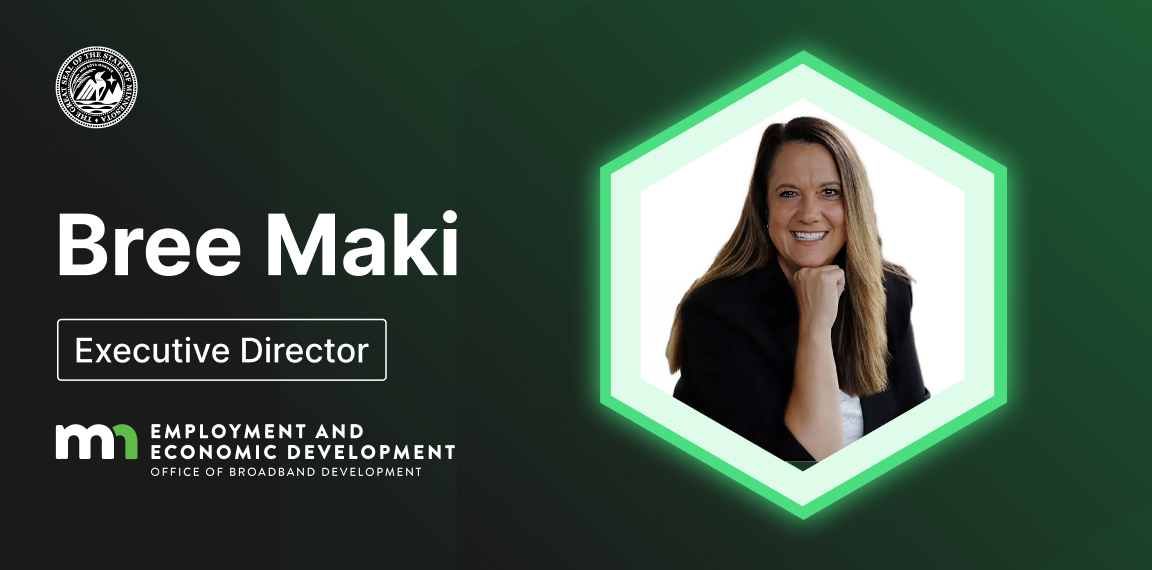
As Executive Director of Minnesota's Office of Broadband Development, Bree Maki leads a team that's been deploying fiber long before BEAD made headlines. They've already connected the easy locations. They've already learned which technologies fail when ice storms take down poles. They've already built relationships with county commissioners, ISPs, and state archaeologists (yes, archaeologists).
While other states scrambled to stand up broadband offices, Minnesota showed up with a playbook, a workforce, and hard-won clarity about what rural resilience actually requires.
I sat down with Bree at the Resilient Critical Infrastructure Summit in Charleston to talk about Minnesota's approach to building networks that connect and endure. The following post features excerpts from our conversation on the Ready or Not podcast.
Minnesota deals with extreme weather: ice storms, flooding, harsh winters. How does that shape your infrastructure planning?
Bree Maki: In Minnesota, we have cold winters, ice storms, and melting snow in the spring. All of which impact infrastructure in different ways. Ice storms can take down poles fast. We're learning those lessons and making sure that when we build back or build new, we're taking all of that into account.
How is Minnesota balancing basic connectivity needs with emerging technologies like AI and precision agriculture?
Bree Maki: First, we can't lose sight of the goal: making sure every single person has the tools they need to thrive. The people who still don't have broadband are in the most expensive, hardest-to-serve locations because we've already deployed to the easy, cost-effective ones.
That said, I've seen amazing things. Universities partnering with counties to provide laptops so seniors can live at home with daily check-ins and fitness classes. And agriculture, it's a huge part of Minnesota. It's not just tractors in the field. It's precision agriculture that needs access. We have communities milking cows remotely. AI is going to play a part in that. Security plays a part in that. The agriculture community is very much part of who we are.
Minnesota's statutory language specifically requires "wireline" infrastructure. Why does that matter?
Bree Maki: When Minnesota decided broadband was critical infrastructure that everyone needed and deserved, they made sure it was a long-term investment. Not just something people get for a short period of time. We're putting money, time, and effort into something that can impact people right now and grow and adapt for the future.
You hired an archaeologist for your broadband team. How does breaking down silos between agencies actually work?
Bree Maki: A few years ago, I brought all the agencies together. Department of Transportation, Department of Natural Resources, Department of Labor, and The State Historic Preservation Office to ask: How can I help you prepare for the work you need to do?
One of the things we were able to do is hire an archaeologist for our team. She came from USDA and the Natural Resource Conservation Service. NTIA is using her as a professional resource in the field. We did that not just for BEAD but because our state projects were getting a little hung up. Having those conversations and breaking down silos has been really effective in building trust with all of our partners in Minnesota.
What keeps you going when the work feels like pushing a boulder up a mountain?
Bree Maki: There are a lot of people who really take what public service looks like to heart. These are people who live and work across the state of Minnesota. Yes, they have tasks at hand, but finding ways to support them as they support us has been really exciting.
Coming to conferences like this, we get to see other broadband directors. It can feel isolating, even with wonderful teams. But being able to come together, even if it's like a small therapy session on a big scale, is so rewarding. I learn every time.
Watch the Full Episode
Minnesota's story is about foresight, resilience, and the hard work of building infrastructure that serves people for generations. Bree Maki and her team are proving that experience matters, especially when the stakes are this high.
Watch the full episode to hear more about Minnesota's journey, the challenges ahead, and what it really takes to connect the last, hardest-to-reach corners of a state.
Make audit-ready your default state.
Post-award reporting, compliance oversight, and execution visibility in one structured system — built to hold as programs scale.