Streamlining BEAD Post-Award Management: Why States Need Standardized Milestones
The BEAD program is entering its most critical phase: moving from awards on paper to networks in the ground and homes connected. The real test will be whether states can oversee thousands of subgrants in a way that is transparent, enforceable, and workable for providers.
What We’re Seeing in Subgrant Agreements
Across the country, states are publishing draft BEAD subgrant agreements for public comment. At first glance, these agreements look strikingly alike — drawing on the same federal authorities and reiterating provisions from IIJA, the BEAD NOFO and Policy Notices, and 2 CFR 200.
But this uniformity should not be confused with a formal NTIA template. Instead, states appear to be working from a shared boilerplate — whether through consultants, legal counsel, or interstate collaboration.
Beneath that surface consistency, practices diverge:
Some agreements define milestone-based disbursements in detail (e.g., fixed-amount subawards tied to verifiable events).
Others reference only broad categories (planning, construction, completion) and leave specifics to attachments.
A few even allow awardees to propose or negotiate milestones, introducing further variation.
The result: while the contracts read alike, the progress and reimbursement structures are inconsistent.
Why Standardization Matters
This variability creates serious challenges:
Oversight burden — States struggle to aggregate apples-to-apples data across hundreds of subgrants.
Reimbursement disputes — Providers face delays when states interpret progress differently.
Federal reporting gaps — NTIA will receive uneven data that complicates compliance reviews.
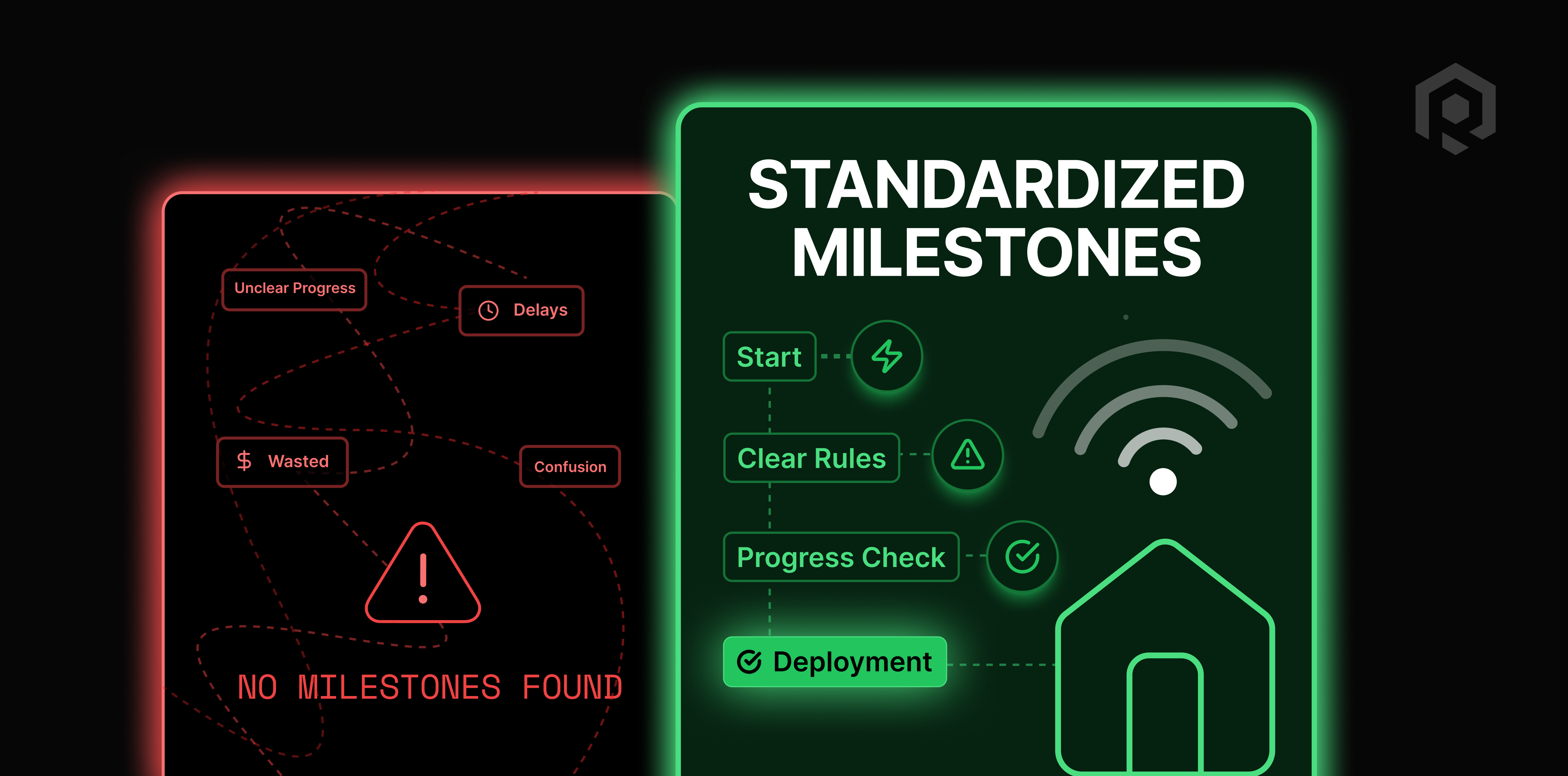
Standardized milestones can provide:
Clarity — Clear checkpoints that mark verifiable progress.
Consistency — Common reference points across projects and providers.
Accountability — Audit-ready evidence linked to each milestone.
Efficiency — Faster reimbursement decisions and fewer disputes.
Key Considerations for States
When designing oversight systems, states should consider:
Meaningful checkpoints — Milestones that demonstrate real progress (not just paperwork).
Reimbursement models — Choosing between traditional cost reimbursement, fixed-amount subawards, or hybrid approaches.
Flexibility where needed — Allowing for technology or provider differences without undermining comparability.
Sustainability — Building structures that will last beyond BEAD into broader broadband operations.
Tying to Reimbursement
Milestones are not just about measuring progress — they also anchor the flow of funds. Under BEAD, states can choose different reimbursement approaches
Traditional Cost Reimbursement — Subgrantees spend their own funds, then submit invoices and receipts for reimbursement.
Fixed-Amount Subawards — Payments tied to completion of objective milestones (e.g., permits approved, 35% of locations serviceable).
Hybrid Models — A mix of both, requiring milestone completion and cost documentation.
By mapping reimbursement to a standardized set of milestones, states can create fair, transparent systems that protect public funds while giving providers confidence that payments won’t be delayed.
The Role of Consultants and Partners
No single office, provider, or platform can deliver BEAD oversight on its own. Federal requirements are intricate, state contexts vary, and providers bring a wide range of capacities and constraints. That’s why consultants and technical partners are essential allies in this work.
Consultants bring:
Policy fluency — translating federal rules into practical, state-specific frameworks.
Capacity extension — giving broadband offices additional hands and expertise when staff are stretched thin.
Cross-state perspective — sharing what’s working elsewhere so states don’t have to reinvent the wheel.
Risk awareness — helping spot issues early and calibrate oversight to prevent delays or disputes.
Facilitation — aligning states, providers, and community stakeholders around shared expectations.
For us, the goal is not to prescribe a single model, but to work in partnership — with consultants, providers, and state broadband offices — to design oversight systems that are rigorous, workable, and built to last.
From Compliance to Confidence
Standardized milestones are more than a reporting tool. They are the foundation of trust:
States gain confidence that networks meet standards.
Providers gain confidence that reimbursements flow predictably.
Communities gain confidence that connections will last.
Turn Compliance Into an Advantage with ARC
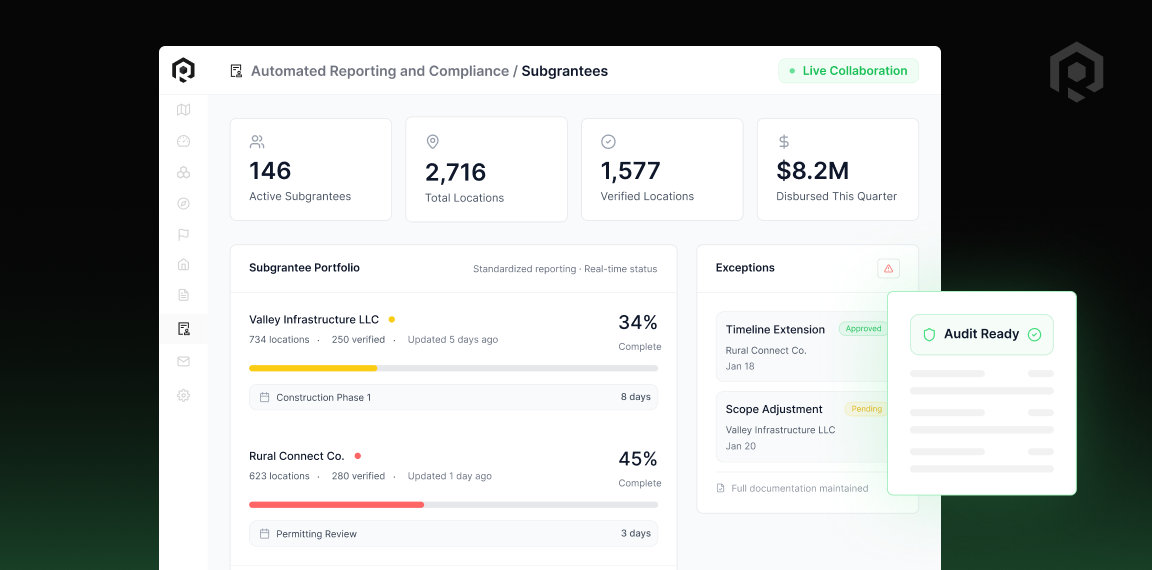
Ready’s Automated Reporting & Compliance (ARC) turns BEAD reporting from a manual grind into a push-button process. Instead of wrestling spreadsheets and inboxes, you get faster reimbursements, fewer back-and-forths with the state, and clear status across locations, milestones, and claims—all fed by source-of-truth data.
When states adopt ARC, subgrantees spend less time on paperwork and more time building. Every automated submission moves milestone payments sooner. Every compliance check is verified in the background. Every audit trail is ready when you need it.
ARC meets BEAD’s bar—and helps everyone win: subgrantees stay focused on delivery; states get complete, consistent reporting.
If the goal is less time on compliance and more time serving customers, ask your state broadband office to adopt ARC.
Make audit-ready your default state.
Post-award reporting, compliance oversight, and execution visibility in one structured system — built to hold as programs scale.