


How Virginia Built Public Trust and Transparency Into BEAD
Virginia’s broadband strategy has long emphasized accountability, local participation, and clear public communication. As the Commonwealth prepared for BEAD, the Virginia Department of Housing and Community Development (DHCD) focused on ensuring that complex challenge activity and evolving eligibility data were visible, understandable, and compliant with federal transparency requirements.
Rather than treating the challenge process as a black box, Virginia prioritized public-facing clarity so residents, local governments, and policymakers could see how decisions were progressing in real time.
"Ready provided the agility we needed to act early in the planning stage, stay aligned with our BEAD objectives, and maintain momentum in Virginia’s broadband expansion."
— Dr. Tamarah Holmes, Director, Virginia Office of Broadband
The Challenge
As Virginia moved through early BEAD preparation, the state faced a familiar problem:
Program data was complex, evolving, and difficult for non-technical audiences to interpret
Residents and local leaders wanted visibility into what was happening, not just final outcomes
Federal guidance emphasized transparency, but most challenge systems were designed for internal adjudication rather than public understanding
At the same time, Virginia’s BEAD challenge intake needed a complementary layer focused on public visibility rather than process execution.
The Solution
Virginia partnered with Ready to support public-facing transparency and mapping throughout the challenge period.
Rather than running the challenge process itself, Ready’s role focused on:
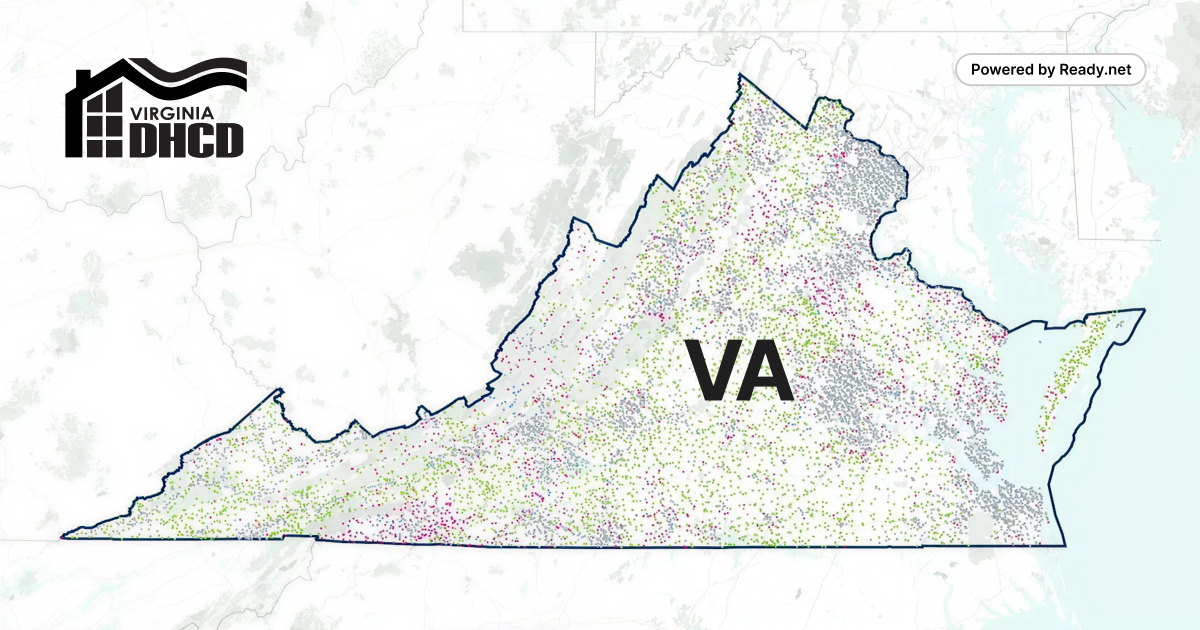
Displaying ongoing challenge activity through an accessible, regularly updated public map
Translating state-provided challenge status data into a clear, navigable interface
Making complex, shifting information understandable for residents, local governments, and other stakeholders
Supporting Virginia’s ability to meet NTIA transparency expectations without adding operational burden to state staff
As Chandler Vaughan, Associate Director of the Virginia Office of Broadband, explains, this visibility mattered not just for the public, but for elected officials responsible for answering to them:
“Giving legislators a map where they can check the status of a specific location and share that information directly with constituents in real time builds real trust in the process.”
— Chandler Vaughan, Deputy Director, Virginia Office of Broadband
Ready also served as a collection point for resident-submitted speed tests, helping enable public participation in providing real-world broadband data to evaluate against reported performance.
Results
Transparency That Built Public Confidence
Virginia maintained a clear, continuously updated view of challenge activity that residents and local leaders could actually understand. This visibility helped reinforce trust in the process, even as data and classifications evolved.
NTIA Transparency Requirements Met Without New Burden
By separating adjudication from public visualization, Virginia avoided adding new reporting or communication workflows for staff while still meeting federal expectations around openness and accessibility.
Meaningful Public Participation
Residents were given a visible way to engage with the challenge process and see how information flowed through the system, reinforcing accountability even where individual submissions did not materially change outcomes at scale.
A Foundation for Ongoing Program Oversight
The emphasis on location-level visibility and data clarity established early norms that now carry forward into Virginia’s post-award execution phase.
Looking Ahead
As Virginia transitions from BEAD preparation into deployment, DHCD is extending its commitment to clarity and accountability into post-award execution through Ready’s Automated Reporting and Compliance (ARC) platform. ARC builds on the same philosophy: location-level visibility, clear reporting, and reduced administrative burden as programs move from planning into construction and compliance.