What Every State and Territory Must Know About Subgrantee Agreements

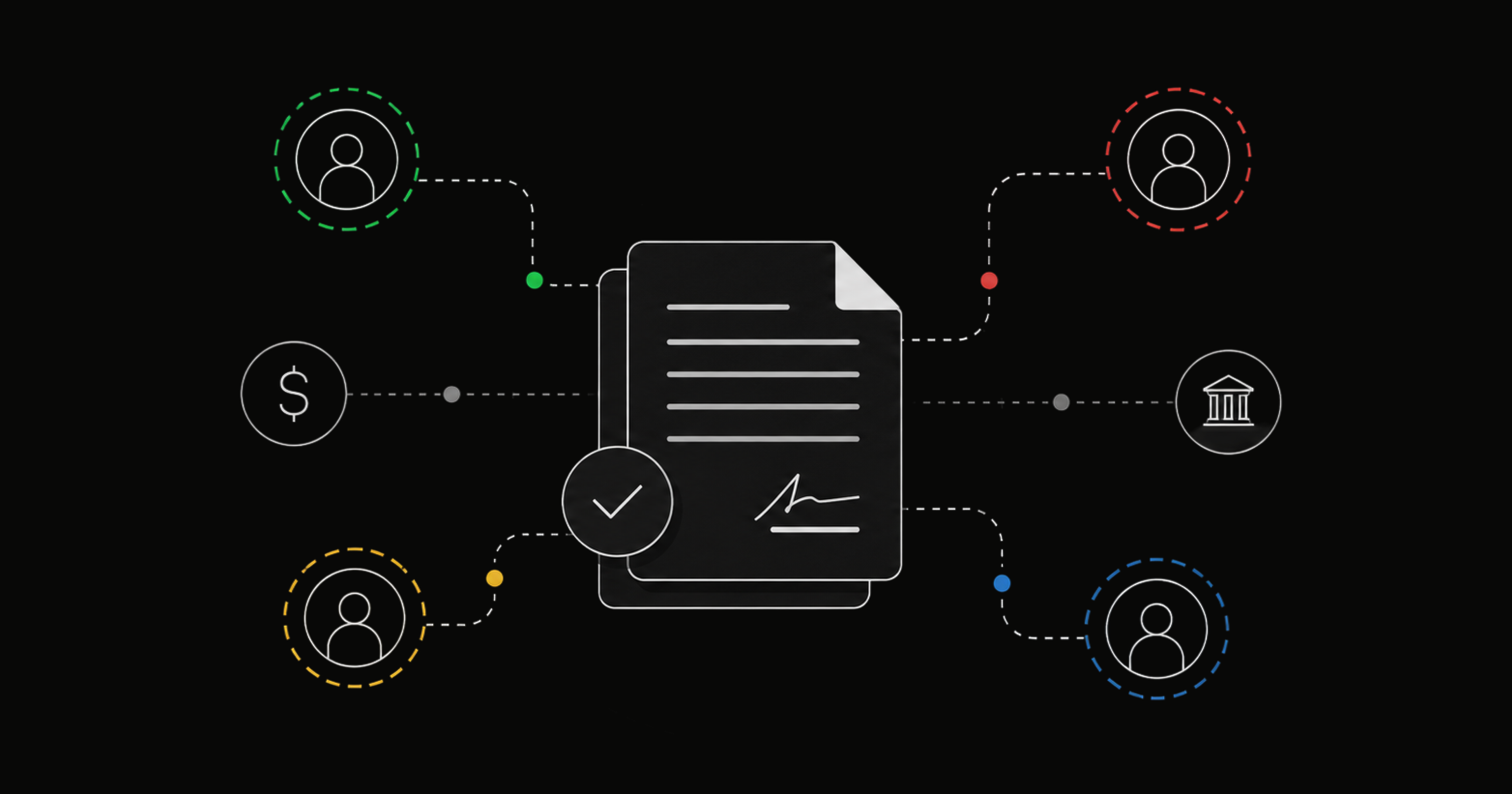
Subgrantee agreements are the operating system of your BEAD program. For a full perspective from the awardee side, see our companion piece: What Every BEAD Awardee Must Know About Subgrantee Agreements.
Once awards are finalized, states must oversee multiple subgrantees working across thousands of locations while meeting federal compliance and reporting requirements that were not specifically designed for a program of this scale.
Your subgrantee agreements establish the framework for three essential functions:
Protect the federal investment. With billions of taxpayer dollars at stake, agreements need strong financial controls, enforceable performance standards, and operational guarantees.
Ensure complete compliance. NTIA requires strict adherence to federal requirements, and even a single violation can create program-wide consequences and scrutiny.
Enable comprehensive oversight. States will manage dozens and, in some cases, hundreds of subgrants and projects at once. Without clear reporting structures and automated tracking, oversight becomes unmanageable and will expose the entire program to failure.
The Five Non-Negotiable Elements of Subgrantee Agreements
Subgrantee agreements are the legal mechanism that turns federal program requirements into enforceable obligations. Each agreement must translate BEAD’s rules into contract terms that your office can monitor and enforce. Most importantly, know the governing compliance and reporting rules – all reimbursable costs must be reasonable, allowable, and allocable. At a minimum, every agreement should cover five non-negotiables:
1. Financial Accountability. Federal law requires financial scrutiny, clawbacks, and audit rights — but the agreement is where you define the details. Agreements must spell out requirements for:
Performance Bonds or Letters of Credit
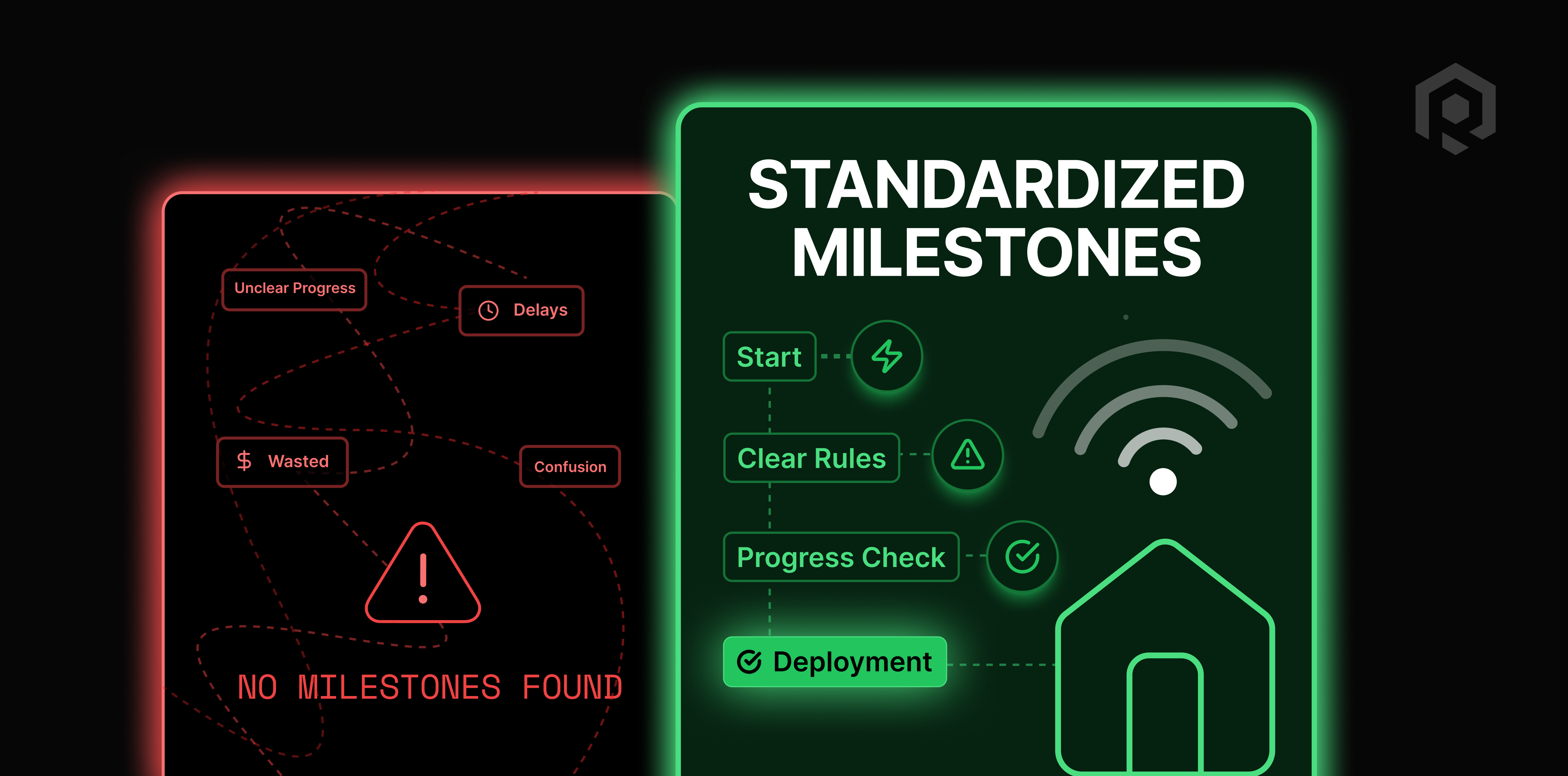
Progress Payments tied to verified milestones and cost principles
Clear clawback, penalty, enforcement, and audit provisions
2. Reporting Infrastructure. BEAD requires continuous location-level reporting, and the subgrantee agreement dictates the cadence, format, and enforcement mechanisms. States and territories should require:
GPS-verified construction data
Real-time financial burn rate updates
Certified labor compliance records
3. Buy America Compliance (BABA). BABA rules apply to BEAD, but enforcement has shifted. Subgrantee agreements should still define:
Manufacturer certification letters (retain for audit)
Procurement records for covered purchases
Procedures for documenting/approving waivers
Program tags for federally-funded equipment
4. Performance Standards. Subgrantee agreements must make adherence to the performance standard minimums enforceable. That means:
Minimum speeds of 100/20 Mbps with ≤100ms latency for every location
Four-year completion deadline
Clear enforcement mechanisms with cure periods and termination provisions
5. Environmental & Permitting. Federal requirements like NEPA and Section 106 apply to every project, but only the subgrantee agreement gives the state or territory enforcement powers. Each agreement should state:
Documented NEPA and Section 106 clearance before work begins
Clearly state stop-work authority for all violations
The Three Fundamental Shifts Driving BEAD Compliance
BEAD contains monumental compliance and reporting challenges: tracking and verifying service delivery across millions of locations, every month, for over a decade.
1. Areas → Locations
Past programs operated at the census block group (CBG) level, allowing awardees to claim entire areas as “served” by reaching only one location within the census block. Fortunately, BEAD flips this model: every Broadband Serviceable Location (BSL) must be individually connected, verified, monitored, and remain audit-ready. That means moving from ~10,000 CBGs to 10+ million discrete individual locations, each requiring proof of connection, proof of service, GPS precision, and location-level performance standards and metrics.
2. Passings → Connections
Previously, federal program “success” meant network infrastructure “passed” a home or delivered service to the demarcation point, to determine whether service was completed and ultimately adopted. BEAD requires the documentation of actual physical connections—subgrantees must connect and serve every eligible location and customer who requests broadband within four years. This adds BSS integration, churn management, privacy protections, and customer satisfaction monitoring into the compliance and reporting mix.
3. Single Event → Time Series
Old NTIA programs ended robust compliance monitoring once network construction was certified, and many other federal programs do not conduct or require oversight and monitoring at all. BEAD has introduced continuous compliance monitoring for more than a decade: 120+ monthly reports per location, ever-evolving federal program requirements, and compounding violations that can cascade across numerous projects. Compliance and oversight may seem to start as manageable tasks in the first few years, but they intensify as equipment ages, staff turnover builds compliance debt, and legacy systems strain under long-term program obligations.
Smarter Oversight Through Agreements and Automation
Strategic states and territories will treat their subgrantee agreements as opportunities to apply lessons learned from BTOP, RDOF, CASF, and other programs by including much stronger compliance guardrails in place from the start. The smartest approach is not one-size-fits-all: rather, compliance and oversight should be calibrated to award size, awardee history, and project complexity. High-risk projects require frequent grant and financial management reviews, site visits, equipment checks, and non-routine touch points, while low-risk projects can operate with more autonomy, all while maintaining the levels of oversight and scrutiny needed to thwart waste, fraud, and abuse.
What will set leading states and territories apart is how they harness automation to make oversight simpler and yet stronger. Tools that reduce manual effort, such as manual spreadsheet and PDF reviews, and provide early visibility, will help directors stay ahead of problems, not just react to them:
Geospatial deployment tracking tied directly to compliance milestones
Dashboards with real-time updates to ensure transparency and flag issues before they become violations
Integrated financial systems that automatically reconcile against approved budgets, invoices, and purchase orders
Predictive analytics that surface risk anomalies and out-of-compliance patterns before they escalate
Finally, strong subgrantee agreements should build on what was learned during the pre-qualification phase. States and territories can carry forward those insights to develop comprehensive risk profiles, assessments, and mitigation plans that guide how each award will be managed. That means:
Financial health and reserves are considered when setting drawdown terms, milestones, reimbursement processes, and oversight intensity
Track record on federal projects is used to determine routine reporting cadence and continuous verification requirements
Subcontractor structures are reflected in compliance monitoring responsibilities
Past compliance history will guide the level of audit and review built into the agreement
Introducing ARC: Automated Reporting & Compliance
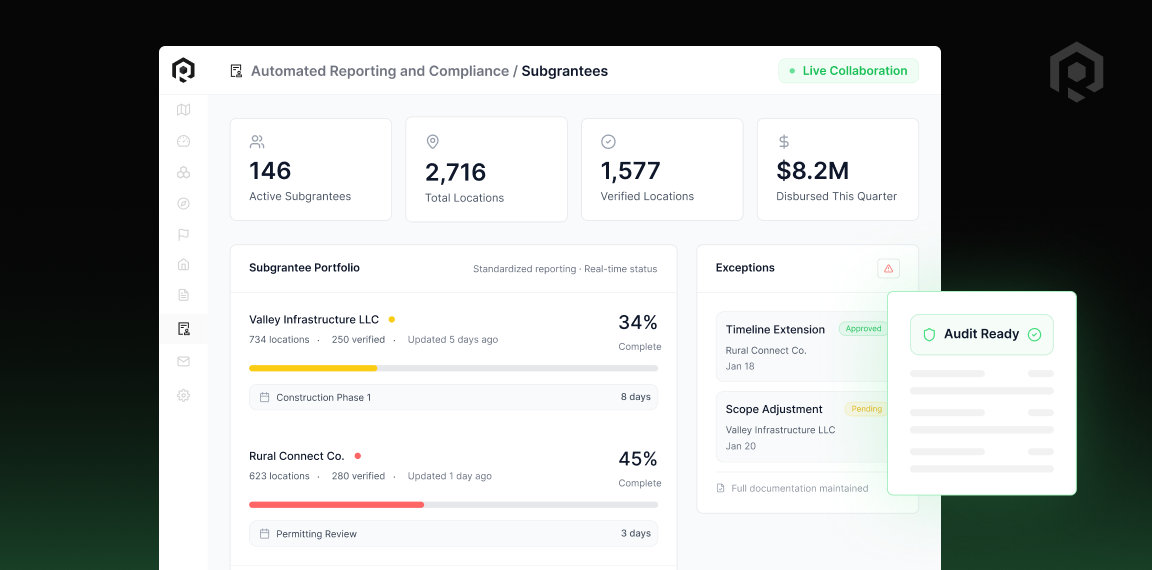
When tracking subgrantees across thousands of locations, with millions of compliance checkpoints, traditional tools like spreadsheets, emails, PDFs, and manual reviews quickly reach their limits. Blind spots can creep in, slowing projects, increasing payment approval and processing time, and making oversight harder. That is why we built ARC, Automated Reporting & Compliance.
ARC solves this by turning subgrantee agreements into living, enforceable commitments and automates the hardest and most complex parts of reporting and compliance. ARC validates evidence in real-time, streamlines reimbursements with AI checks, and gives state directors a single dashboard to monitor every project at once.
The states and territories that succeed in connecting every household, business and anchor institution won’t simply be the ones with the most funding or the biggest awardee providers. Success will come to those who recognize early that BEAD requires strict adherence to operational capabilities, processes, and procedures designed to manage work at this scale.
ARC transforms overwhelming reporting and compliance demands into clear, actionable geospatial workflows that protect every dollar, verify every connection, and deliver on the promise of broadband for every community.
Make audit-ready your default state.
Post-award reporting, compliance oversight, and execution visibility in one structured system — built to hold as programs scale.