America’s Infrastructure Crossroads: From Vulnerability to AI Leadership

“Victorious warriors win first, then go to war.” – Sun Tzu
As we prepare to celebrate America’s 250th birthday, we must confront a sobering reality: the critical infrastructure connecting and powering our nation contains a not-so-secret vulnerability that, if exploited, would send us back into the digital dark ages.
Bad News: America has an Achilles Heel
America’s vulnerable critical infrastructure is one cascading failure away from collapse:
More than 80% of America's compute and store resources are concentrated in a small handful of hyperscale data centers.
Fourteen states lack a single Internet Exchange Point (IXP). A single backbone failure could cut them off entirely.
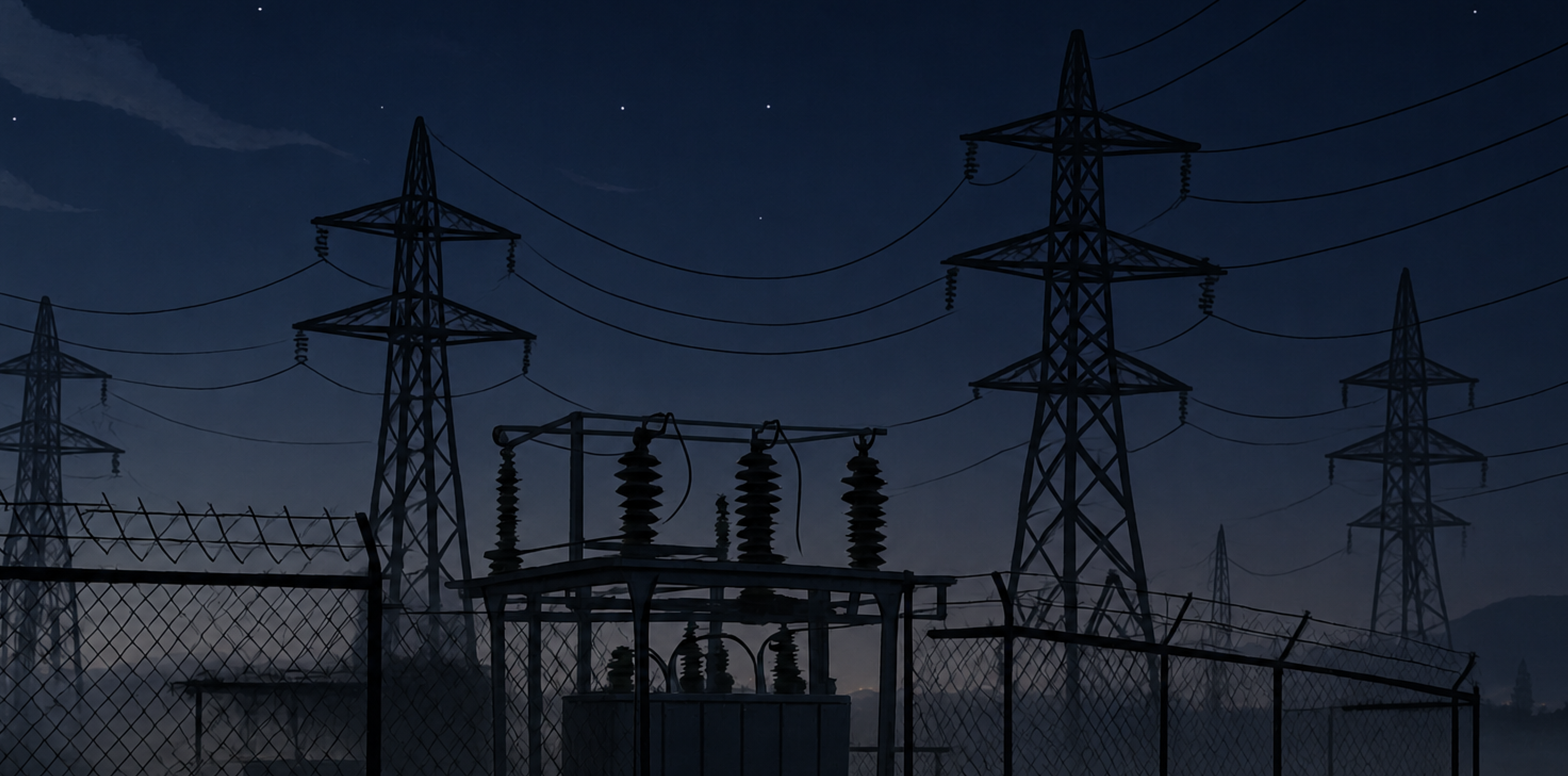
Most power grid, fiber network, and communications assets remain unshielded against increasingly potent electromagnetic pulses and particle beams, even though they control everything we call "smart," from smart homes to smart cities to smart grids.
A few coordinated tactical electromagnetic pulse attacks could render our smart infrastructure very dumb in less than a blink. Our adversaries know this. They’ve studied our weaknesses for decades, developing strategies and weapons designed to cripple America before a single shot is fired.
Whether the trigger comes from sophisticated adversaries or natural events, America relies on infrastructure unable to withstand a wide and growing range of systemic risks. A coordinated attack on the U.S. power grid could exceed $1 trillion in economic damage in the first year alone. Such a price makes proactive investment required to harden, shield and distribute our critical systems look negligible by comparison.
Good News: Resilient Critical Infrastructure Funding Exists
America already committed to invest in resilient critical infrastructure, provided leaders in Washington work to follow through on our commitment. The Infrastructure Investment and Jobs Act (IIJA) authorized over $1 trillion for essential projects, with $42.5 billion allocated through the Broadband Equity, Access, and Deployment (BEAD) program.
Here's one opportunity for our nation’s leaders: Estimates suggest $10-25 billion in BEAD non-deployment funds remain available for reallocation. Today, the fate of BEAD non-deployment is up in the air, but these already-authorized dollars can and should be refocused toward making resilient the infrastructure that keeps America online.
Because BEAD non-deployment funding is already appropriated under IIJA, no new spending is required. Instead, America has an opportunity to strategically reallocate existing funds to address one of the most critical gaps in our national defense. This isn't new spending—it's strategic reallocation of existing commitments toward our most pressing national security priority. Redirecting these funds to resilience is the fastest way to secure America’s digital backbone.
Building on this win-win, non-deployment funds could be paired with the visionary bipartisan American Infrastructure Bonds Act, introduced by Senator Roger Wicker (MS) & Senator Michael Bennet (CO), to dramatically amplify public and private investment into resilient critical infrastructure. If approved and combined with BEAD non-deployment dollars, this approach could significantly increase the resources available for resilience, potentially doubling or even tripling the impact of BEAD non-deployment.
Great News: Resilience Investments Unlock AI at the Edge
Every dollar invested in resilient critical infrastructure today protects lives, strengthens our economy, and positions America to continue leading the AI revolution. Resilience ensures the benefits of AI reach deep into rural America for next-generation wellness, precision agriculture, robotic manufacturing, re-industrialization, and more.
Investment in making America's vulnerable infrastructure resilient is the exact same investment needed to bring next-generation AI to "the edge"— also known as where people live, work, and play.
When we distribute computing power away from over-concentrated hyperscale centers, and into thousands of hardened edge nodes, we simultaneously:
Eliminate single points of failure adversaries could exploit
Distribute AI’s insatiable demand for power and natural resources more evenly
Enable AI applications that require ultra-low latency and local processing
Create economic opportunity in every community across America
Build antifragile systems that grow stronger under stress
Consider the near future of emergency response or telehealth. An outage from a fiber cut that doesn’t fail over to a backup within seconds puts lives at risk. Hundreds of milliseconds of latency added when critical services are routed thousands of miles to a hyperscaler and back is the difference between success and failure. Critical processing must happen locally, with storage in nearby infrastructure nodes and transmission maintaining constant availability. We must proliferate our nation’s IXPs — from dozens to thousands.
The same hardened, distributed infrastructure that protects America from attack also unleashes the greatest economic opportunity in our 250-year history.
The Choice Before Us
Every hardened substation, redundant fiber route, and distributed computing node makes America more resilient and better positioned to lead the AI revolution. The infrastructure hardest to secure today becomes tomorrow's greatest competitive advantage.
The window for action is closing fast. BEAD funding decisions must be finalized within the next month to meet NTIA’s end of year goal. We cannot afford to let this moment pass.
We can keep operating on the assumption that solar flares or cunning adversaries will never put our nation to the ultimate test. Or we can invest in distributed, resilient systems that ensure America remains connected, protected, economically dominant, and ready for the next 250 years.
For a deeper analysis of how to design and secure the critical infrastructure America depends on, read 7 Key Principles of Resilient Critical Infrastructure.
Make audit-ready your default state.
Post-award reporting, compliance oversight, and execution visibility in one structured system — built to hold as programs scale.