The ABCDs of AI-ready Infrastructure

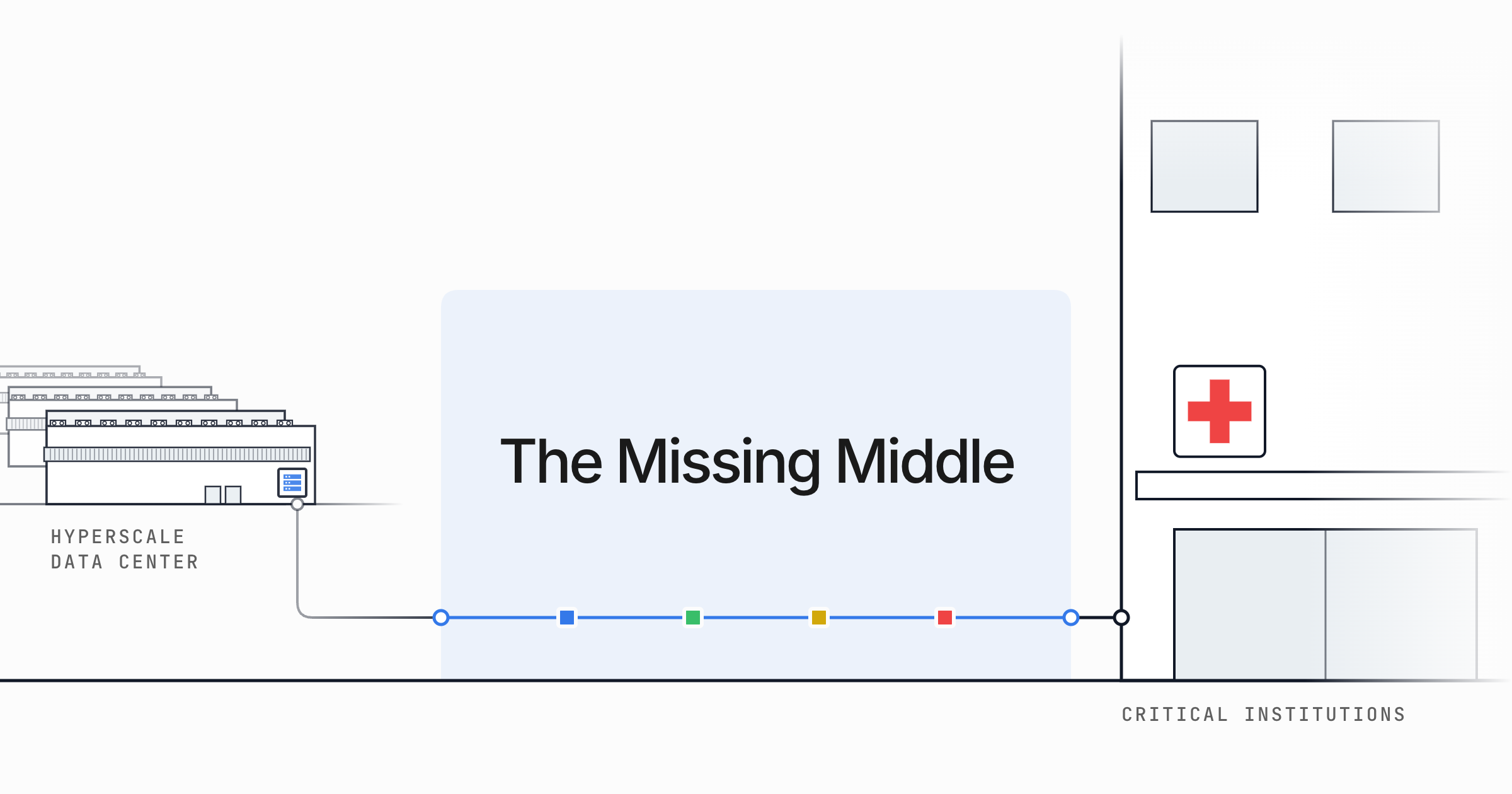
AI is advancing faster than the infrastructure required to ensure it delivers what people need, when and where they need it. The next phase of the AI buildout will be defined not only by what intelligence can do, but by whether the systems underneath it can deliver when and where people depend on them.
AI’s most consequential promise may be its ability to make scarce expertise available to far more people, in far more places.
A doctor can bring more context into a remote visit. A teacher can give more individualized support. A dispatcher can understand a caller speaking another language. A utility operator can spot emerging problems across the grid earlier and respond with better information.
AI has the potential to loosen constraints of geography, time, cost, and the number of qualified people available. But AI only creates value when intelligence can reach the people and systems that need it, where and when the work actually happens.
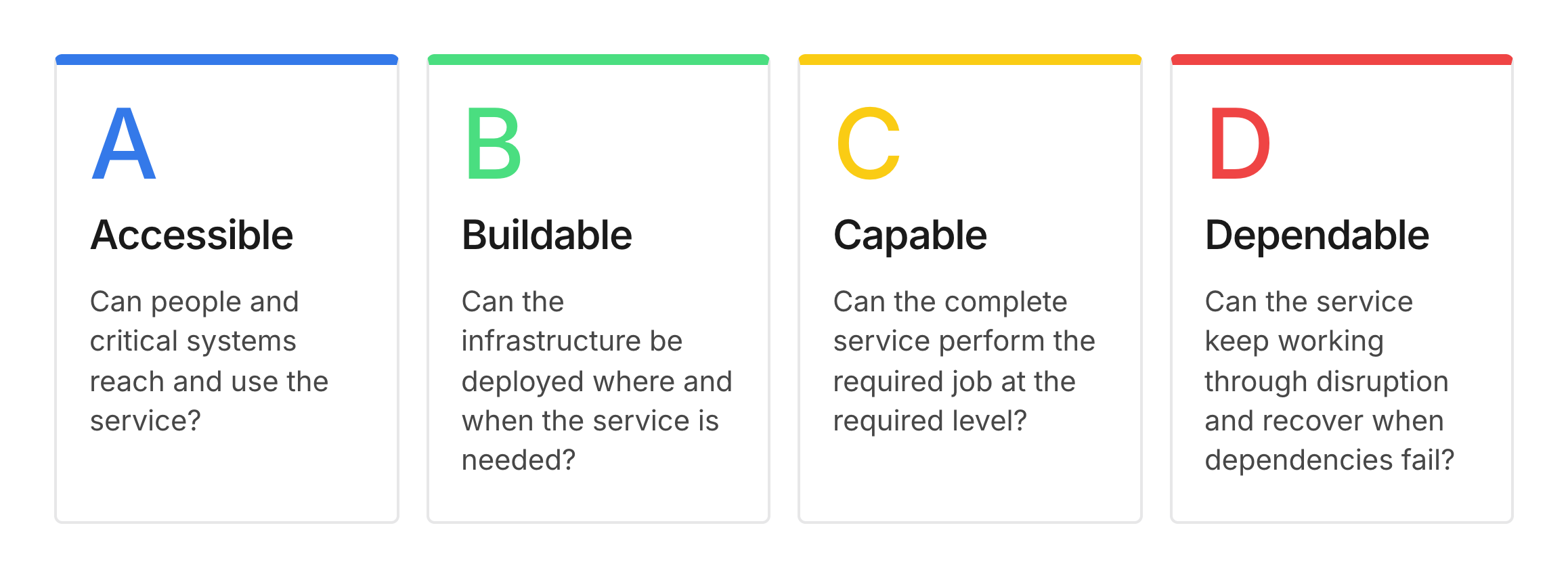
Turning AI capability into dependable service therefore requires more than powerful models and applications. The infrastructure supporting the service has to pass four tests: Accessible. Buildable. Capable. Dependable.
Together, they form the ABCDs of AI-ready infrastructure.
Accessible
Can people and critical systems reach and use the service?
Accessibility means every participant in a service has a usable path to the people, systems, and information required to complete the job. Depending on the service, that may require the right interface, equipment, connectivity, privacy, authentication, data access, or support.
Consider a 911 dispatcher taking a call from someone who speaks a different language. AI could help transcribe and translate the conversation in real time while the dispatcher determines what is happening and coordinates the response. For that service to work, the caller must reach 911, the dispatcher must be able to access location information, maps, records, and response systems, and the translation service must have the correct audio, sufficient compute, and reliable connectivity to support a live emergency.
Accessibility means giving the people and systems that depend on a service a usable path to it in the context where the work happens.
Buildable
Can the infrastructure be deployed where and when the service is needed?
A service may be valuable and technically feasible, but the infrastructure still has to fit the places where the work happens and come online on a practical timeline.
Imagine a state wants to add local AI capacity across dozens of hospitals, schools, emergency communications centers, and utility sites. Building a new facility for every location would be slow and expensive. Existing sites offer a different path because many already have power, connectivity, security, and operating capacity in the places where services are needed.
The Buildable test asks whether that existing capacity is actually usable. Is enough power available? Is cooling sufficient? Will the equipment fit? Can approvals be secured? Can installation and support happen inside an operating facility?
Technical feasibility at one site is not enough. The deployment model also has to repeat. Standardized designs, installation methods, repair, replacement, and expansion determine whether one successful deployment can become ten, fifty, or hundreds without reinventing the process each time.
Buildability is therefore both local and systemic: a deployment has to work at a specific site, and the model has to work again at the next one.
Capable
Can the complete service perform the required job at the required level?
Capability is a service-level test. The required standard may include response time, accuracy, throughput, data freshness, capacity, privacy, and the appropriate level of human involvement. The right standard depends on the mission.
An electric utility analyzing equipment conditions may need fast local processing and current operational data. A school using AI-assisted tutoring may prioritize student privacy and reliable access. A public safety application may require near-real-time information and very little tolerance for delay. Each service creates a different performance envelope for the infrastructure supporting it.
Those requirements determine how much computing capacity is needed and where the workload should run. Some workloads can run effectively on a device. Others are better suited to centralized infrastructure. Others require shared compute, storage, and data closer to the institution or critical system.
Capability is ultimately a fit question: does the complete architecture meet the standard the service actually demands?
Dependable
Can the service keep working through disruption and recover when dependencies fail?
Dependability begins with a clear definition of what must remain available when normal conditions change. Which functions must continue? How long can reduced operation be sustained? What can degrade safely? What has to happen for full service to return?
In the 911 example, an AI-assisted translation workflow may normally rely on a remote service. If that connection fails, another network path, local capability, or reduced set of functions may need to keep the service operating until remote systems return.
Continuity depends on the full chain supporting the service: power, cooling, compute, storage, data, identity, connectivity, monitoring, maintenance, and accountable operators. Recovery matters just as much as continuity. Systems may need to reconnect, synchronize queued information, reconcile changes made during reduced operation, and verify that normal service has resumed.
Dependability means designing and testing both continuity and recovery before either is needed.
What AI-ready infrastructure must deliver
The real test of AI-ready infrastructure is not how impressive the underlying technology is. It is whether an important service can actually be delivered in the real world.
Our work with the institutions responsible for funding, planning, deploying, and operating critical infrastructure has reinforced a consistent lesson: the hardest failures rarely come from a single missing technology. A service fails because some part of the complete delivery chain cannot be reached, deployed, perform at the required level, or continue through disruption.
That is what the ABCDs are designed to test. Pick one service your institution depends on and ask:
Can the people and systems that need it access it?
Can the infrastructure actually be deployed where the work happens?
Can the complete service perform the mission at the required standard?
And when a dependency fails, what keeps working, for how long, and how does the service recover?
AI is advancing faster than the infrastructure required to ensure it delivers what people need, when and where they need it. The next phase of the AI buildout will be defined not only by what intelligence can do, but by whether the systems underneath it can deliver when and where people depend on them.
Want to put the ABCDs into practice?
Explore the Resiliency Playbook for practical guidance on planning and deploying infrastructure that can deliver critical services where they’re needed — with the access, capacity, deployment model, and resilience to keep them working.
Make audit-ready your default state.
Post-award reporting, compliance oversight, and execution visibility in one structured system — built to hold as programs scale.