The Missing Middle of AI Infrastructure
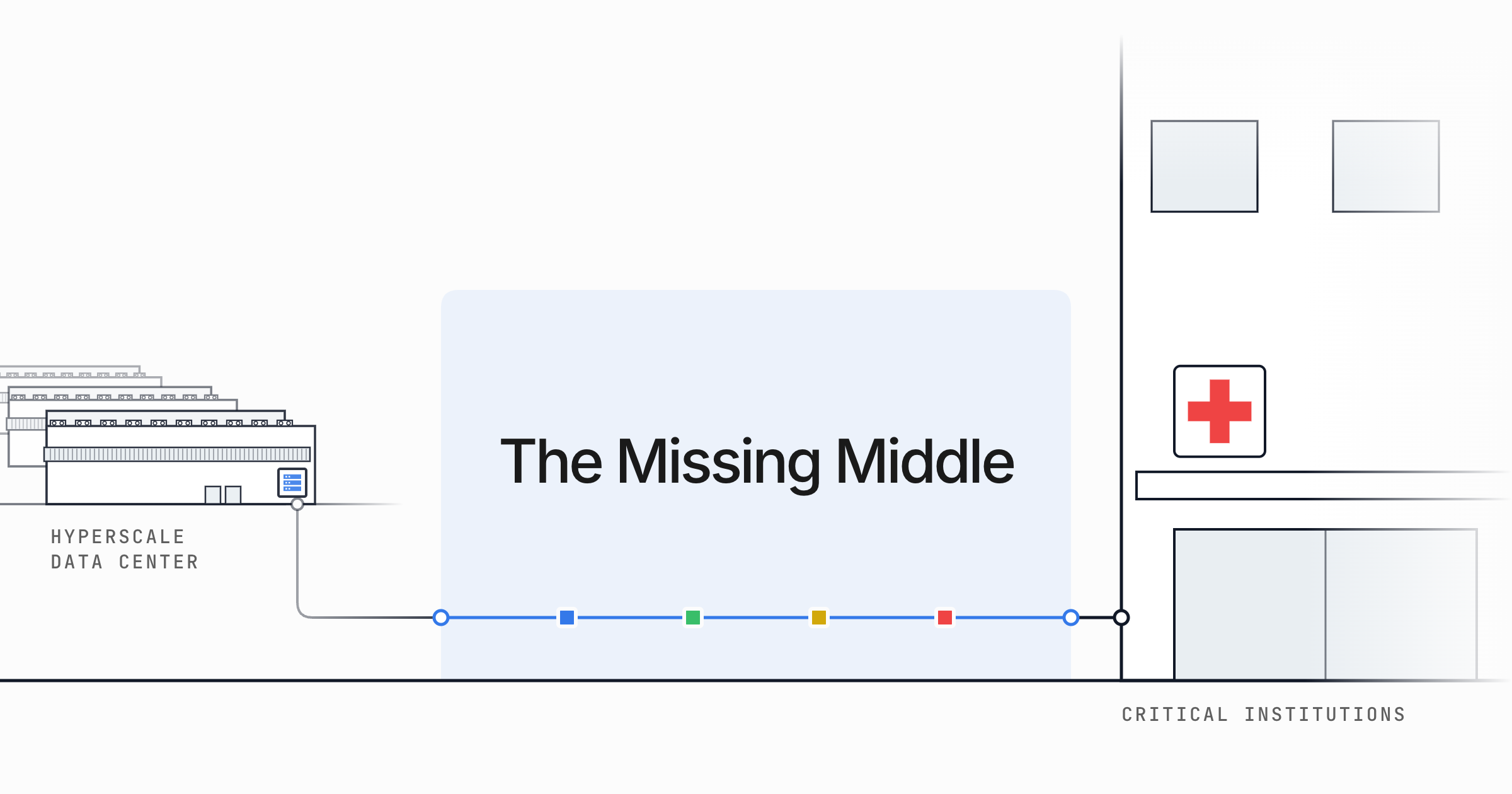
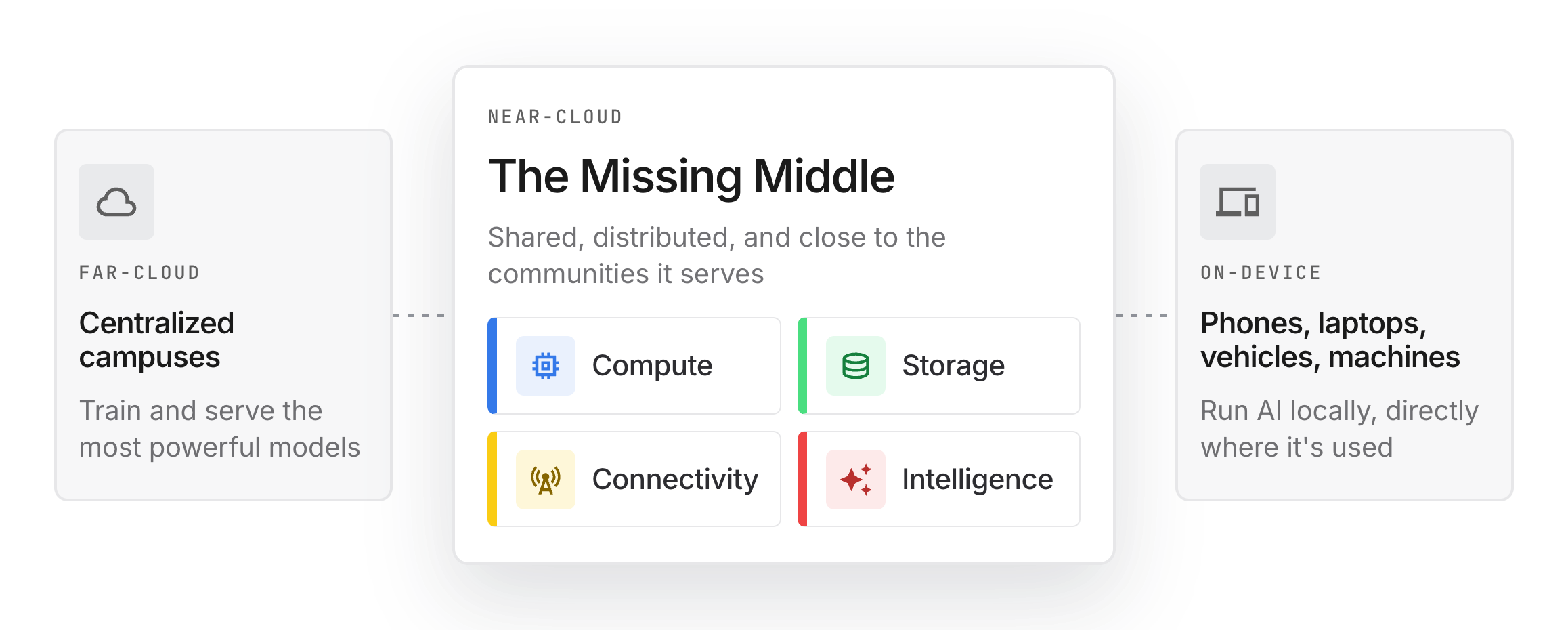
AI infrastructure is becoming three-tiered: on-device, near-cloud, and far-cloud. At one end, enormous centralized campuses train and serve increasingly powerful models. At the other, phones, laptops, vehicles, and machines are becoming capable of running AI locally. Between them sits the Missing Middle: the near-cloud, a distributed layer of shared compute, data, connectivity, and AI capability close to the people and critical systems that need it.
Both ends are necessary. But the truth is that AI models can do far more than those two extremes alone can deliver. The person who needs an AI-enabled doctor, mental wellness check-in, tutor, or other critical service is unlikely to get the model’s full potential through a pocket computer. And for critical services, the model must remain useful in blue skies or gray.
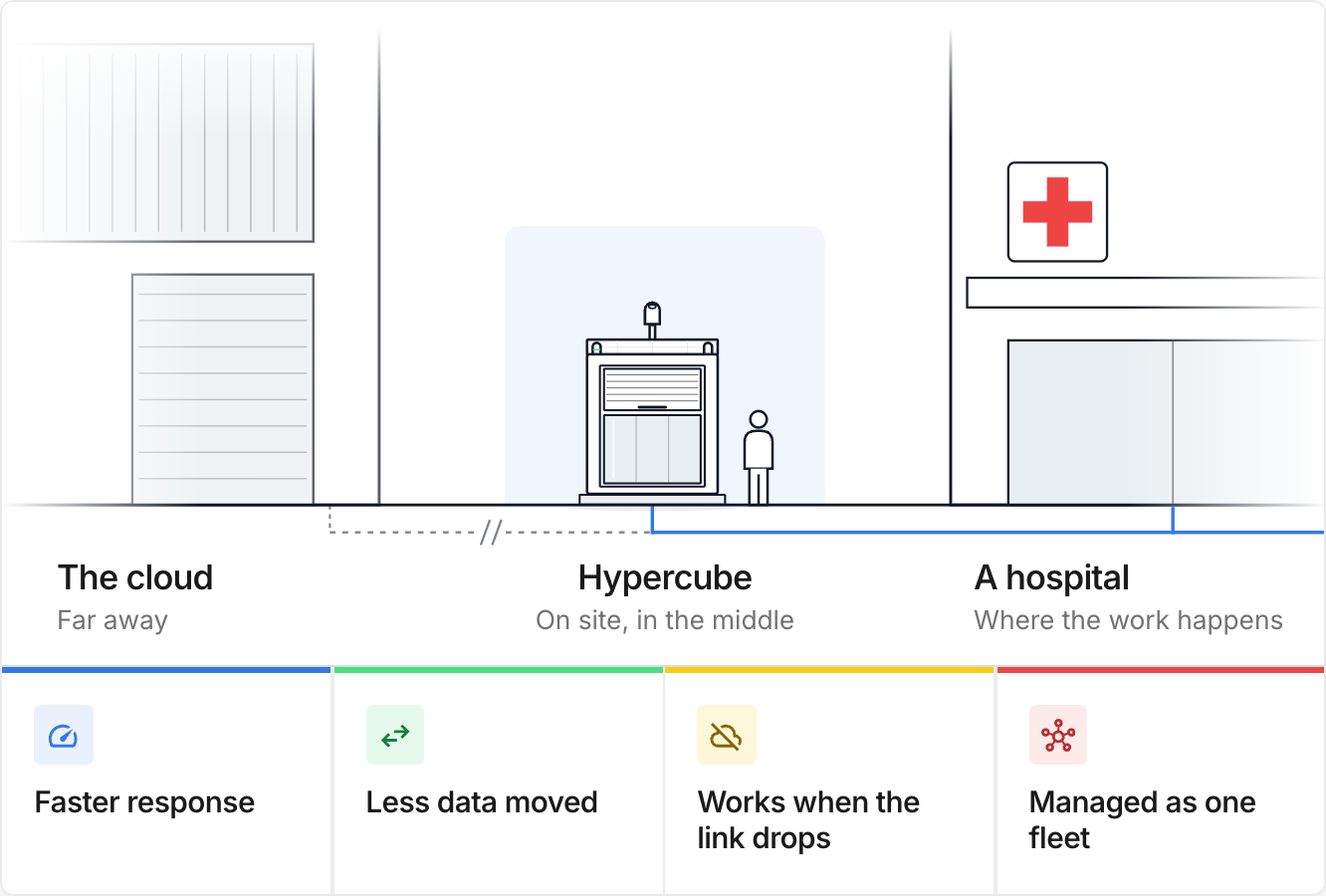
The Missing Middle fills the space between those extremes. It gives hospitals, utilities, public safety agencies, schools, and other institutions enough nearby compute, data, connectivity, and supporting systems to run more capable services without recreating an entire hyperscale cloud locally.
 Consider a hospital imaging department. AI can help flag CT scans that may need prompt attention, helping clinicians prioritize which scans to review first. Running that capability nearby may improve response time, reduce unnecessary data movement, and allow parts of the workflow to remain available when outside connectivity is lost.
The hospital does not need the entire cloud inside the building. But critical scans, records, and supporting systems should not always have to make a thousand-mile round trip to a distant data center before useful work can happen. Enough capability needs to remain nearby for the workflow to keep working where care is delivered.
The cloud and the device are not enough
A phone can run a small AI model in your hand. A giant data center hundreds of miles away can run far more powerful models in the cloud.
But many of the most consequential AI services fit neither extreme. They need more computing power, data, and supporting infrastructure than an individual device can provide, while also benefiting from being closer to the people, equipment, and records they serve.
The idea extends beyond putting compute at the edge. Critical services depend on more than processing power. Applications, data, identity, connectivity, and other supporting systems may also need to remain available nearby.
For critical infrastructure, the goal is not primarily to shave milliseconds off latency. The goal is to keep useful capability available when remote dependencies slow down, disappear, or fail.
AI needs infrastructure ready for anything
Putting compute nearby solves only part of the problem. A server inside a hospital or utility facility provides little continuity if authentication, application data, communications, or model access disappear when the outside connection fails.
A rural hospital may keep AI processing local and still lose the imaging workflow if patient records or authentication remain available only through far-cloud systems.
The same problem applies to NG911 routing, emergency communications, utility operations, and other critical services. Keeping the model nearby matters only if the records, permissions, communications, and other dependencies needed to use it remain available too.
For Americans to fully realize the benefits of AI, services must be capable, available, and reachable. The infrastructure underneath them must work in blue skies and gray: power, storage, connectivity, physical protection, sensing, and software working together so useful capability remains available through ordinary conditions and disruption.
Resilience creates the foundation for local AI
Local AI and infrastructure resilience do not need to be separate projects. An electric cooperative hardening a communications site may already need reliable power, protected equipment, network diversity, backup connectivity, and monitoring. Adding compute and storage can make the same investment capable of supporting local AI workloads.
The same opportunity exists for hospitals, public safety agencies, universities, and military installations. Rather than build dedicated AI infrastructure alongside separate resilience infrastructure, the physical layer can serve both.
Resilience creates immediate operational value, while added compute and storage expand what the same infrastructure can support as AI demand grows.
Every node adds capability to the network
A single node serves a place. A network of nodes can serve a region. Each deployment adds local capacity, another resilient point of service, and another place where critical workloads can keep running closer to the people and systems that need them.
The real opportunity is not to scatter isolated boxes across the country. It is to connect and manage distributed infrastructure as one system, so capacity, connectivity, equipment health, and failures can be coordinated across many sites.
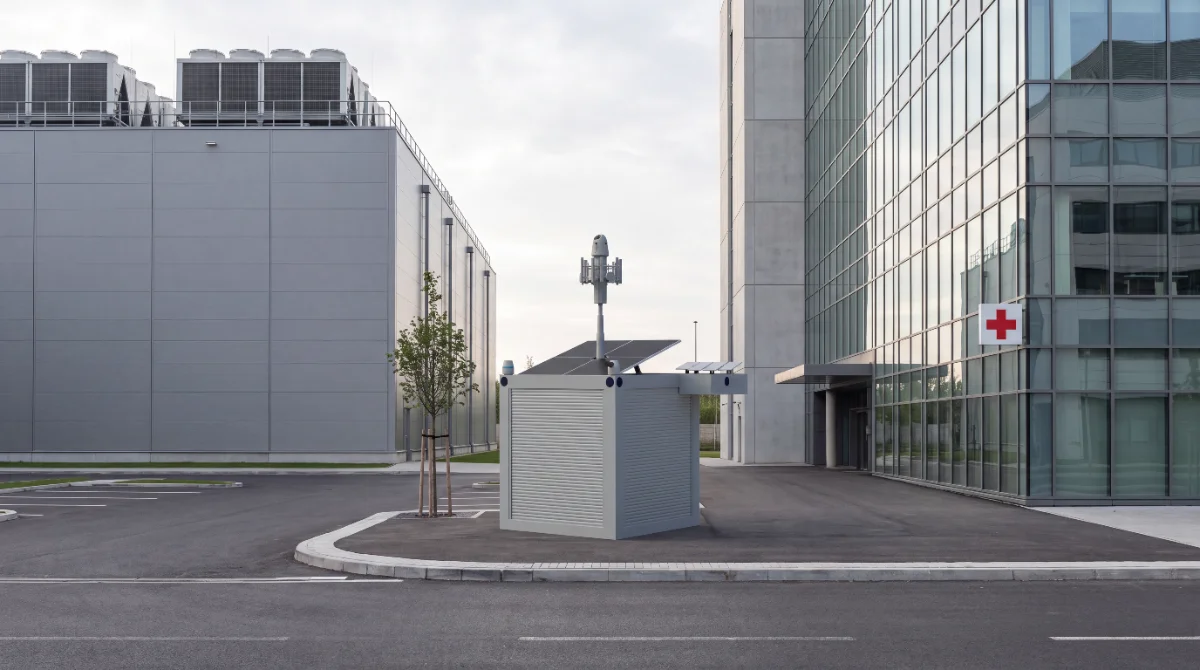
Working with infrastructure owners and public institutions has made the operating challenge concrete for us. Distributed infrastructure becomes more useful when operators can see and manage it as one system. That challenge is shaping what we are building at Ready: Hypercube brings compute, storage, connectivity, and sensing closer to critical systems; BOSS provides visibility and control across the distributed fleet; and access infrastructure creates places where people can actually reach the services the network makes possible.
The next AI buildout will fill the Missing Middle
Hyperscale campuses will continue getting larger. Devices will continue getting smarter. Neither trend eliminates the need for infrastructure in between.
For every critical AI-enabled service, ask:
Where must the service remain useful?
Which dependencies must remain available with the service?
Who is responsible for operating the complete system?
The answers determine where a workload belongs and which supporting systems must be deployed with it.
AI infrastructure has largely been defined by concentrating extraordinary amounts of compute in a few places and compressing increasingly capable intelligence into ever-smaller devices.
I believe the next major infrastructure category will emerge in the Missing Middle. AI models are already capable of extraordinary things. The infrastructure question now is whether those capabilities can reach the people and critical systems that depend on them, close enough to be useful and resilient enough to remain available in blue skies or gray.
Hypercube
Compute, storage, connectivity, and sensing, close to where critical work happens.