What Broadband Directors Must Know About AI Infrastructure
State broadband directors have spent years of their careers working to connect communities to reliable, high-speed internet. Their efforts have helped lay the foundation for a more connected America, navigating complex funding programs, coordinating with providers, and working to reach communities that have long been left behind.
The $42.45 billion BEAD program represented a historic milestone in that effort, committing America to building broadband networks that would serve communities for decades. But as states worked to deliver on that promise, a new technological shift was already underway. Just over a year after BEAD became law in 2021, ChatGPT brought generative AI into mainstream awareness, beginning a shift in expectations for what those networks would need to deliver.
By the time states received BEAD allocations in the summer of 2023, AI was already reshaping expectations for what digital infrastructure could make possible. Today, states are building networks intended to serve communities for decades, even as those expectations keep changing. Connecting communities remains essential, but states also need to understand what their infrastructure can do, what other systems it depends on, and what happens to essential services when part of the system fails.
As AI changes what digital infrastructure needs to deliver, broadband directors have an opportunity to build on the work they've already done. Their expertise and relationships can help states understand how networks, computing, power, and critical services fit together, and identify opportunities to make better use of existing infrastructure.
AI changes what networks need to deliver
Consider a small manufacturer in rural America. Today, broadband connects the factory to suppliers, customers, and remote technical support. AI could soon help inspect products, identify equipment problems before machines fail, and improve production. Delivering those capabilities reliably requires more than a fast connection, with computing and data potentially distributed across the factory, nearby facilities, and distant data centers. Keeping relevant equipment records and an AI model locally could allow the factory to detect problems and support operations without depending on a continuous connection to a distant cloud.
In The Missing Middle of AI Infrastructure, I described the emerging three-tiered architecture of AI infrastructure: device, near-cloud, and far-cloud. Near-cloud infrastructure brings computing and storage closer to the communities they serve, reducing delays and allowing certain services to continue when distant systems become unavailable. But proximity alone isn't enough. Those capabilities also require reliable power, access to essential data, and network connections that support local operations.
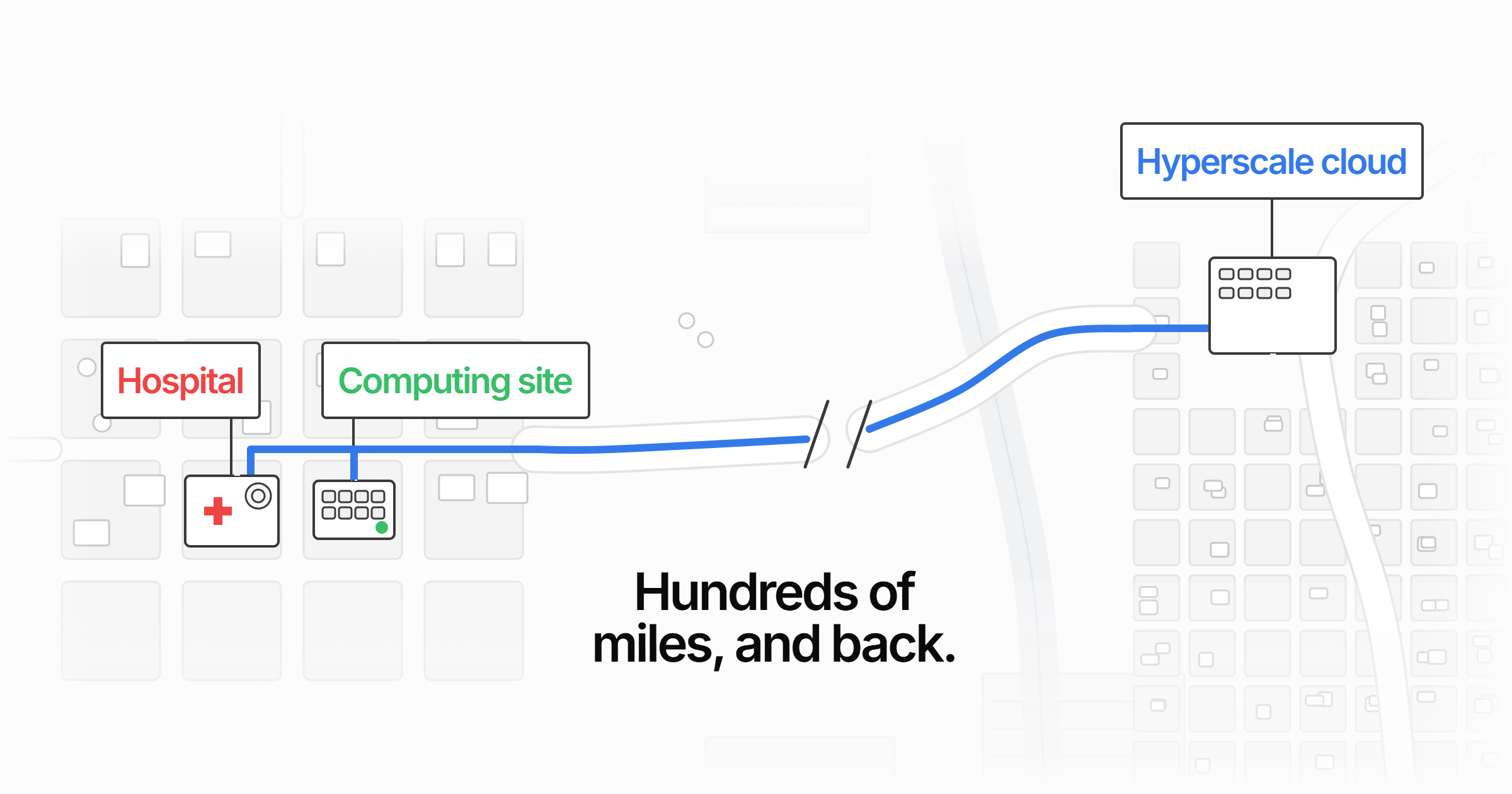
A computing facility might sit a few miles from the institutions it serves, yet network traffic could travel hundreds of miles through a distant exchange point before reaching it. Where computing happens matters, but so does how the network connects people and institutions to it.
Put existing infrastructure to work
Broadband directors already understand the geography of connectivity, from last-mile networks to middle-mile routes and interconnection points. Their knowledge provides a starting point for identifying existing assets that could support new capabilities.
A network hub with sufficient power and cooling could house computing and storage that serve nearby institutions. A public library or community college with reliable broadband could connect residents with remote specialists, educators, or other services unavailable locally.
The next opportunity isn't necessarily to build more infrastructure, but to get more out of the infrastructure America has already built.
Resilience must be evaluated as a system
The more useful our digital services become, the more we depend on them. AI accelerates the shift by moving increasingly important work into systems that rely on continuous access to data and computing. Broadband programs already plan for resilience through backup power, redundant equipment, and alternate connections, but protecting individual assets is not the same as keeping the services they support available. A network can look resilient on paper while hiding shared dependencies that become obvious only when something fails.
Consider two supposedly independent fiber routes serving a community that cross the same bridge. Or several facilities that depend on the same electrical substation. Multiple providers may even rely on the same underground conduit. In each case, what appears to be redundancy can disappear with a single failure, potentially disrupting services across an entire region.
The problem extends beyond the network itself. Placing computing capacity near a community does little good if the applications, records, or AI models required to use it become unavailable. Consider a local AI model helping a utility identify equipment problems. If maintenance histories, equipment records, or current operating data are only accessible through distant systems, the model may lose access to the information needed to make useful assessments during a network disruption. Keeping essential records accessible locally, alongside the models that use them, can allow certain services to continue operating even when connections to distant systems fail.
Identifying shared dependencies often requires information held by different providers, institutions, and public agencies. No single organization necessarily sees the whole picture. State broadband offices can help connect those perspectives, uncover vulnerabilities that individual projects may overlook, and build a shared understanding of how networks, power, computing, and essential services depend on one another.
From broadband maps to infrastructure intelligence
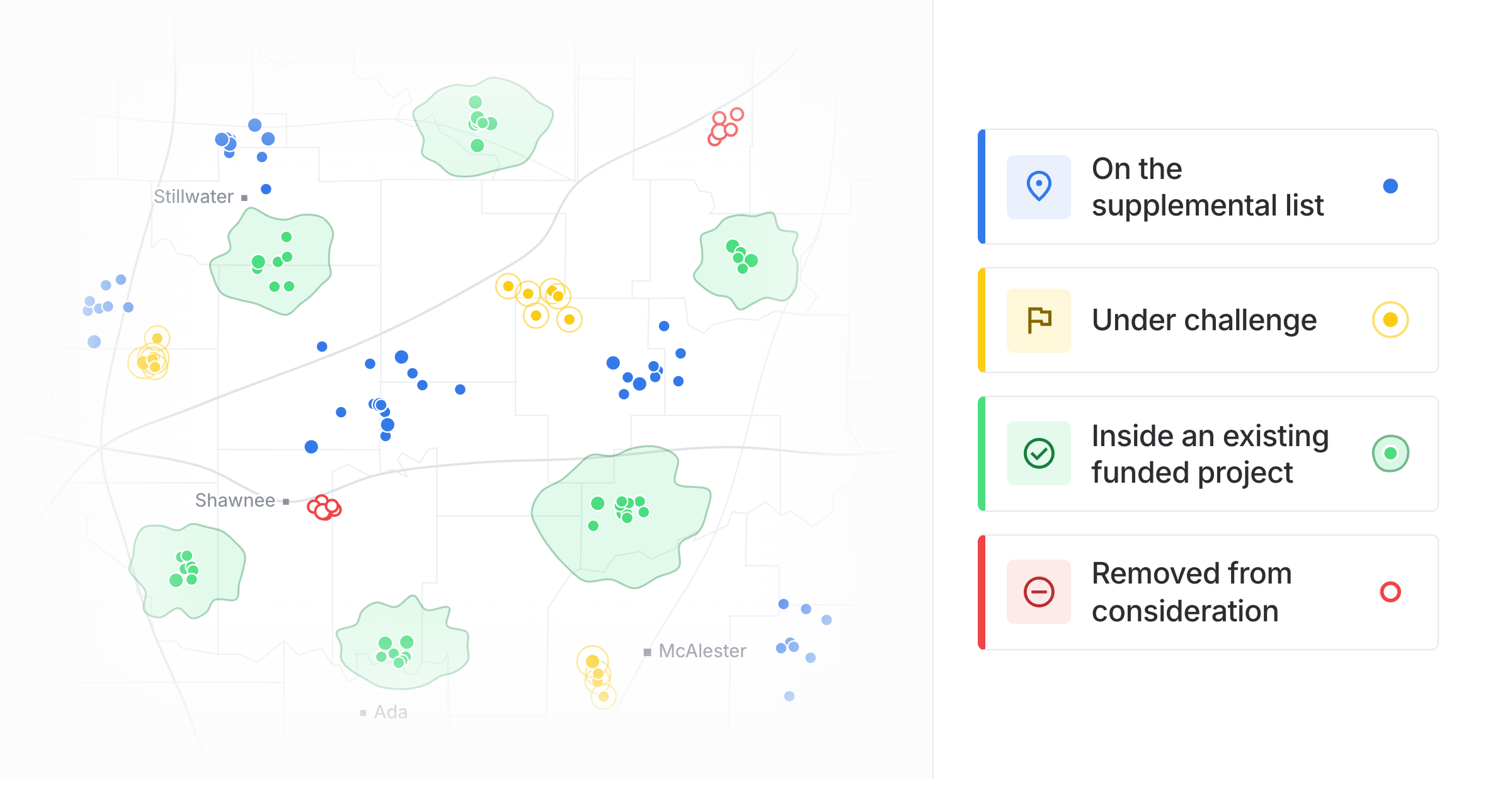
Broadband offices can build on the information gathered through BEAD to develop a more complete picture of their states' infrastructure. Imagine putting that knowledge to work on a broader infrastructure map. Start with one region, work with providers and other agencies, and ask three questions:
Where is our infrastructure? Look beyond broadband coverage to understand network routes, interconnection points, electricity and backup power, computing and data facilities, and the critical institutions that depend on them.
What happens when it fails? Identify shared dependencies and single points of failure, including which essential services would become unavailable during a disruption.
What could it make possible? Identify opportunities to use existing infrastructure to support local AI, healthcare, education, public safety, utilities, and economic development.
Repeating the exercise across regions could help states compare risks, identify opportunities to put existing assets to work, and set priorities for future investments. Success could mean eliminating a shared point of failure, keeping an essential service running during an outage, or enabling a rural community to access services previously unavailable locally.
Broadband offices don't need to operate data centers or manage private networks themselves. Their role is to bring the right organizations together, identify shared needs, and help states act on the opportunities their infrastructure maps reveal.
The work is only beginning with BEAD
The networks funded through BEAD will serve communities for decades, and broadband offices have an opportunity to help states understand how those networks fit into a much larger infrastructure system. The next phase can begin while construction and oversight are still underway, using the same planning and coordination expertise to prepare for the services communities will need.
A more complete infrastructure map gives broadband directors something concrete to bring to state leadership: where their regions are vulnerable, where existing assets could do more, and where coordination could improve essential services. Governors and state legislatures will ultimately decide how to keep that expertise in place, whether through permanent broadband offices or other long-term arrangements. Broadband directors can help define the next mission by showing what their states stand to gain.
BEAD's long-term value will be measured not only by the locations connected, but by what those connections make possible. AI is expanding those possibilities, from new tools for rural businesses to better access to essential services and infrastructure that keeps working through disruptions. Broadband directors have helped connect America. The next step is to connect and protect America.
Continue the conversation at Leaders Summit XI
The next chapter of broadband won't be shaped by any one office alone. At Leaders Summit XI in Virginia, state broadband leaders will come together to discuss construction, supplemental deployment, monitoring, and long-term oversight, with a focus on protecting today's investments and preparing for what comes after BEAD.
Leaders Summit XI
November 18–20, Salamander Middleburg, VA.
An invitation-only gathering for state broadband leaders to compare approaches to BEAD execution, tackle emerging challenges, and discuss the future of state broadband offices.