What Happens When the Cloud Is Unreachable?
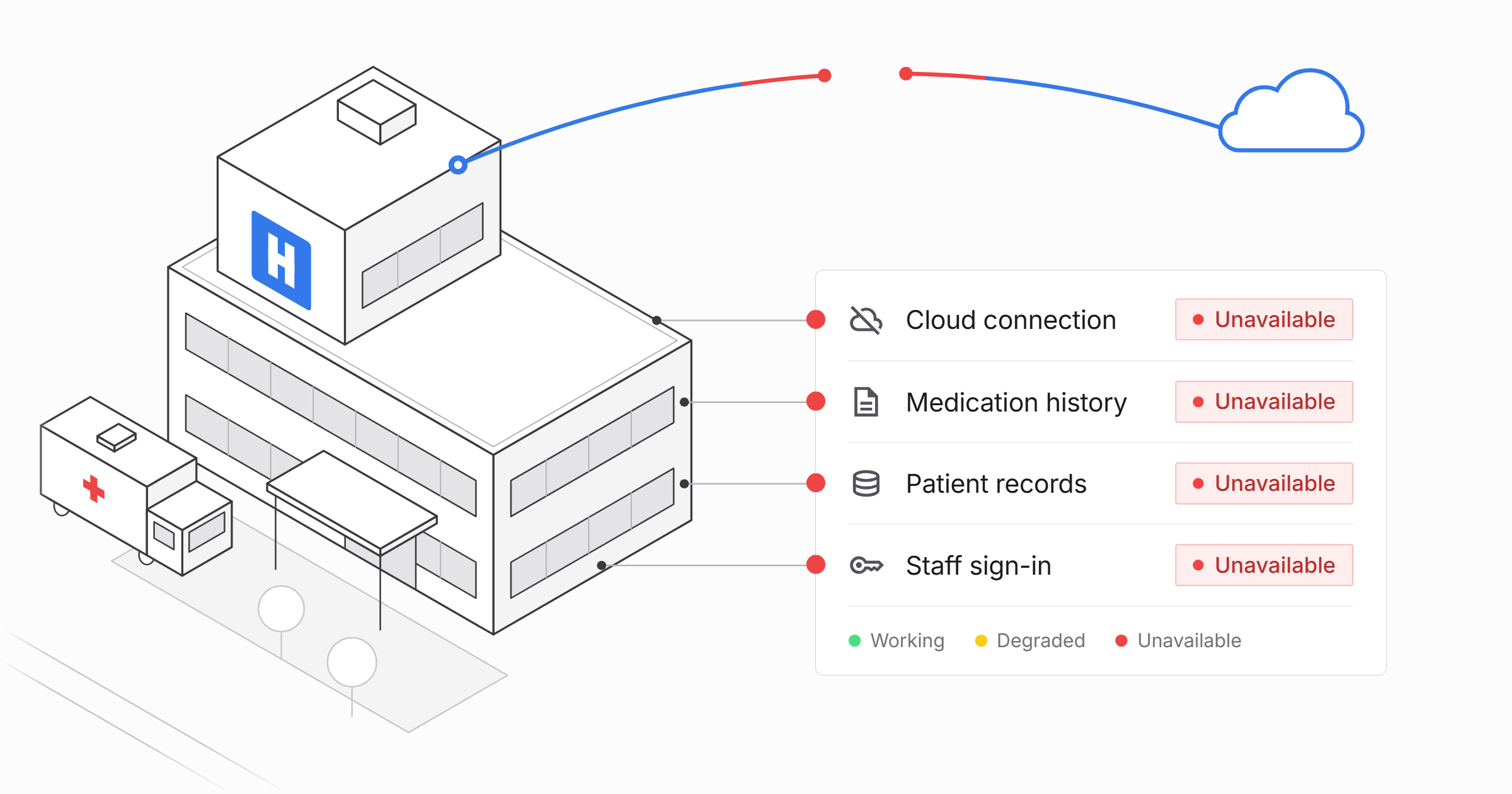
When someone arrives at a hospital in need of emergency care, doctors need answers quickly. What medications is the patient taking? Are there existing medical conditions? What did the latest tests show? Much of that information is stored in electronic health records, often accessed through services that depend on infrastructure outside the hospital.
But a hospital can lose access to those records even when the cloud services supporting them are operating normally. All it takes is a failure in the network connecting the hospital to those services.
For a rural emergency department, losing that connection could mean suddenly losing access to medication histories, allergies, and recent test results. Staff turn to downtime procedures, potentially working with incomplete records, making phone calls, or documenting care on paper until access is restored.
Hospitals have long prepared for such disruptions. But more essential services now depend on interconnected digital infrastructure, from medical imaging and laboratory systems to pharmacy operations. AI adds another layer of dependence. Hospitals already use AI to interpret medical images, review patient information, and identify patients at risk. As AI becomes part of more everyday decisions, losing access may mean losing a capability clinicians rely on to deliver better care.
As more essential services rely on cloud infrastructure, operators must plan for three conditions:
Normal operation when connected
Continued service when connectivity fails
Safe recovery when connectivity returns
A working network doesn't guarantee a working service
In The ABCDs of AI-ready Infrastructure, I introduced four standards for infrastructure: Accessible, Buildable, Capable, and Dependable.
Dependable asks whether a service can continue when supporting infrastructure becomes unavailable. Some functions should remain operational at a reduced level rather than allowing the entire service to stop.
A hospital doesn't necessarily need every feature of its electronic health record to remain operational during an outage. It needs clinicians to retain access to enough reliable information to treat patients safely.
That distinction changes how resilience should be evaluated. A backup server may be functioning, but clinicians could still lose access if authentication depends on an unreachable service. A secondary network connection may offer little protection if both routes share the same upstream dependency.
Operators must begin with the service they need to deliver and trace everything required to make it work: data, applications, authentication, computing, devices, connectivity, electricity, and the people and procedures supporting them.
Then comes the critical decision: What is the minimum acceptable service during a disruption?
For the hospital, the requirement might be access to essential patient histories, medication information, and allergies throughout a four-hour connectivity outage, even if electronic ordering and other functions remain unavailable. Clinical leaders would need to determine which records are essential, how current they must be, and what alternative procedures are safe.
Once those requirements are defined, infrastructure investments can be evaluated against what the service actually needs.
Three operating conditions for dependable service
Cloud and local infrastructure can work together to preserve essential functions when remote systems become unreachable. For more sophisticated services, a backup connection or stored records may no longer be enough. Continuity may also require local networking, computing, and eventually AI models that can run without reaching a distant facility.
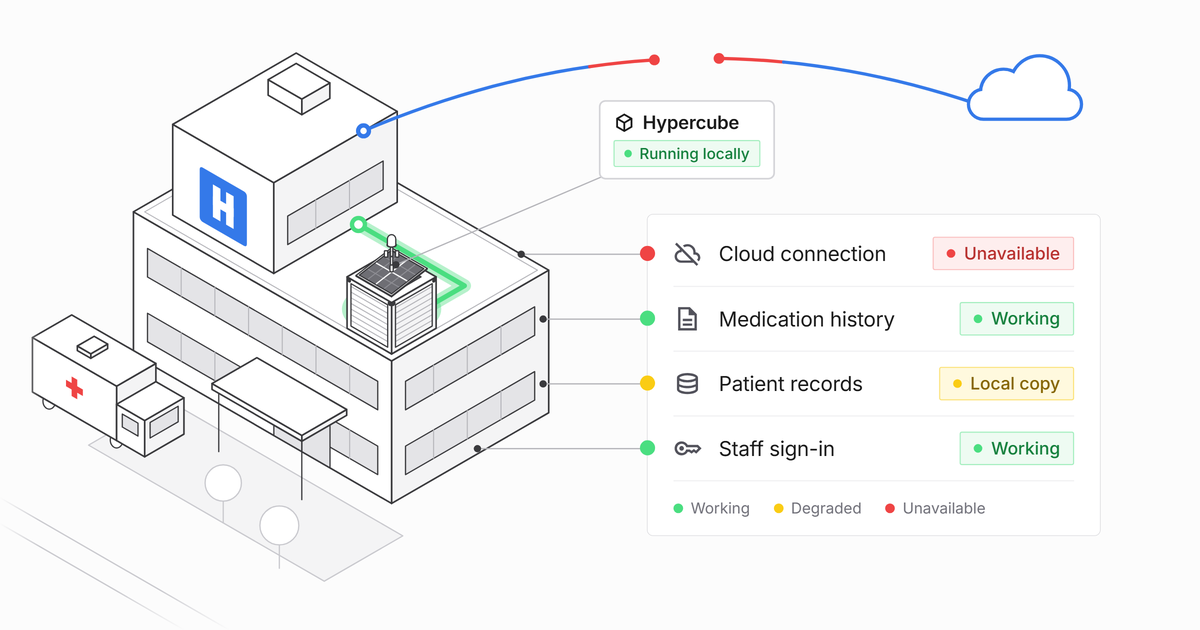
For a rural hospital, one illustrative approach would maintain selected patient information locally, allowing clinicians to access critical records during an external connectivity outage. The approach would need to account for the hospital's existing systems, security requirements, and clinical needs.
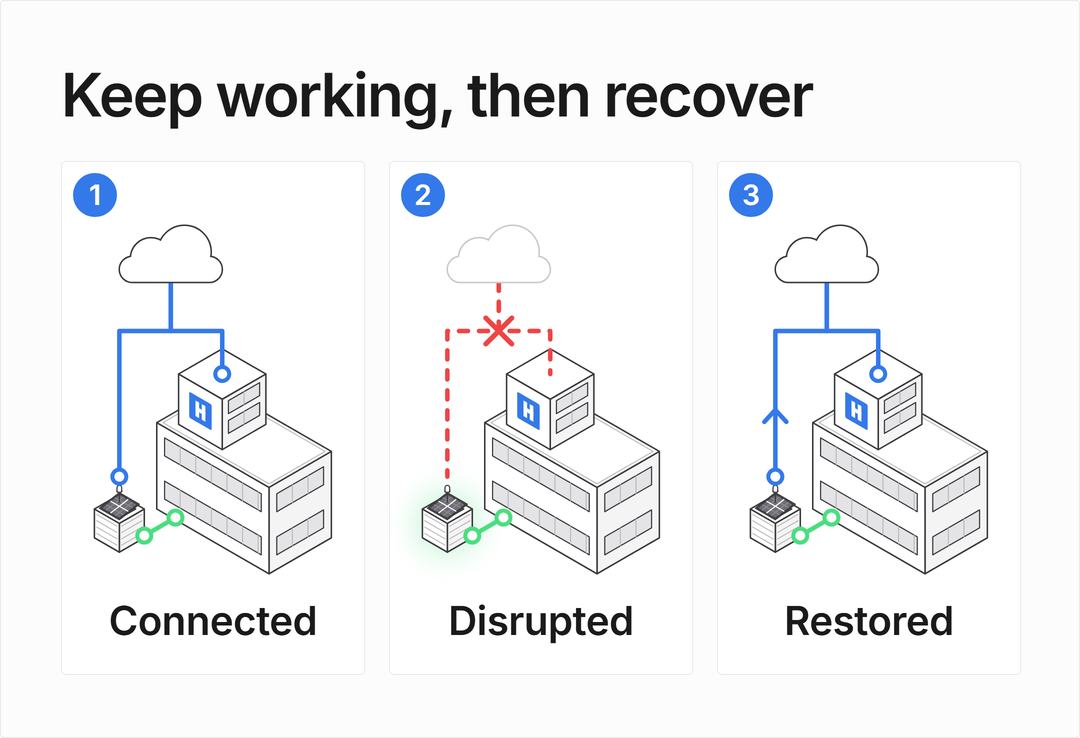 1. Normal operation: Cloud-connected care
Clinicians use the hospital's primary electronic health record while a local system keeps an updated, secure copy of essential patient information. The same infrastructure could also support AI applications and other services during normal operations, so long as critical patient-record access remains protected.
2. Disruption: Local continuity
If the hospital loses its connection to the cloud, clinicians can turn to locally stored records using an application and sign-in process that works without internet access.
They may still be able to review medication histories and allergies, even if electronic ordering or access to newly updated records is unavailable. Staff follow established downtime procedures, with local computing, networking, and backup power keeping the essential service running.
3. Recovery: Return to normal operations
When the connection returns, hospital staff verify that the primary systems are working and update patient records with information documented during the outage. Any missing or conflicting information needs to be resolved before normal workflows resume.
Each stage requires preparation, from keeping records current and ensuring staff can access them to deciding who manages the transition back to normal operations.
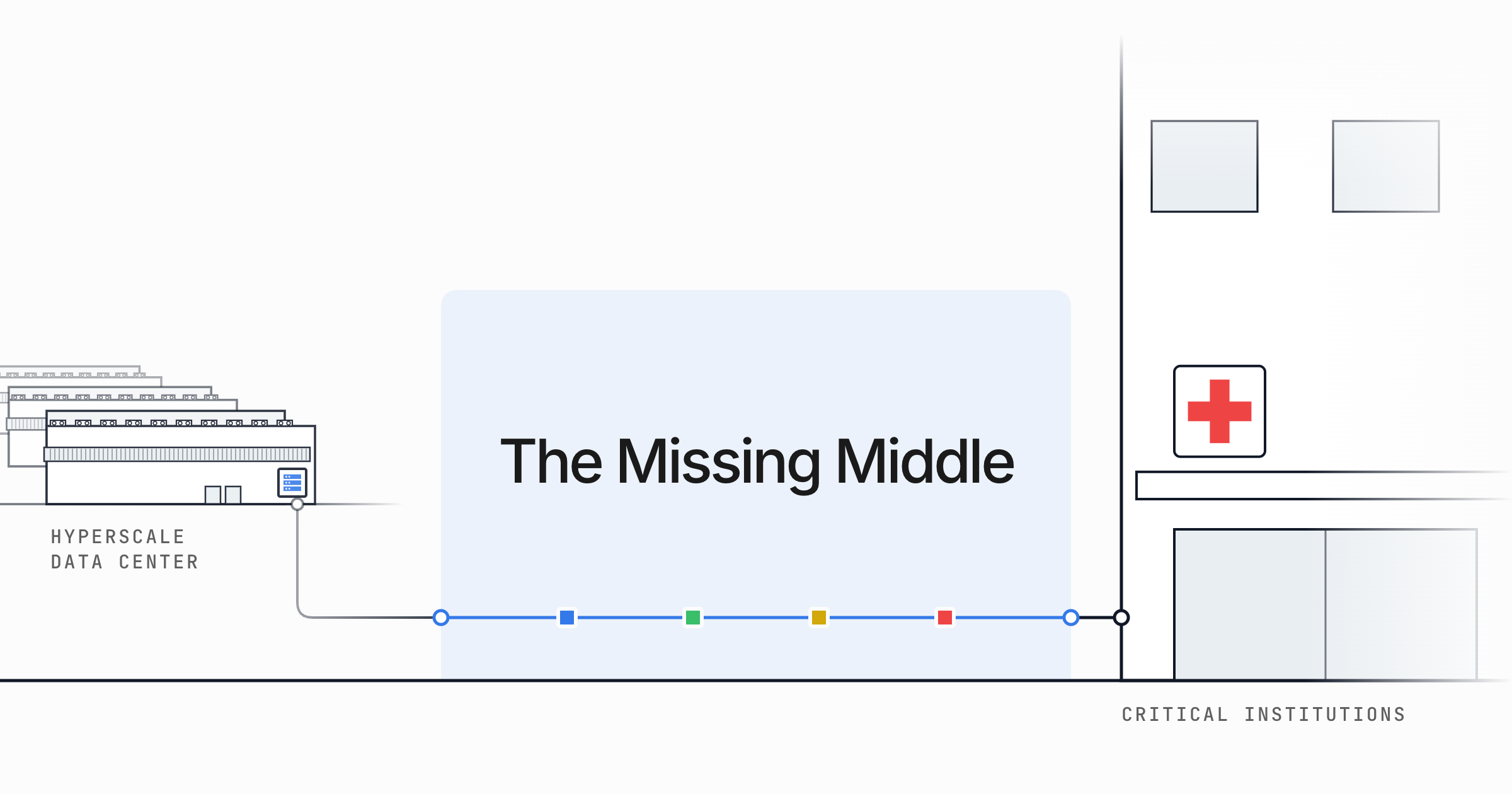
For a deeper look at the role of local computing and storage, check out The Missing Middle of AI Infrastructure.
Different failures require different safeguards
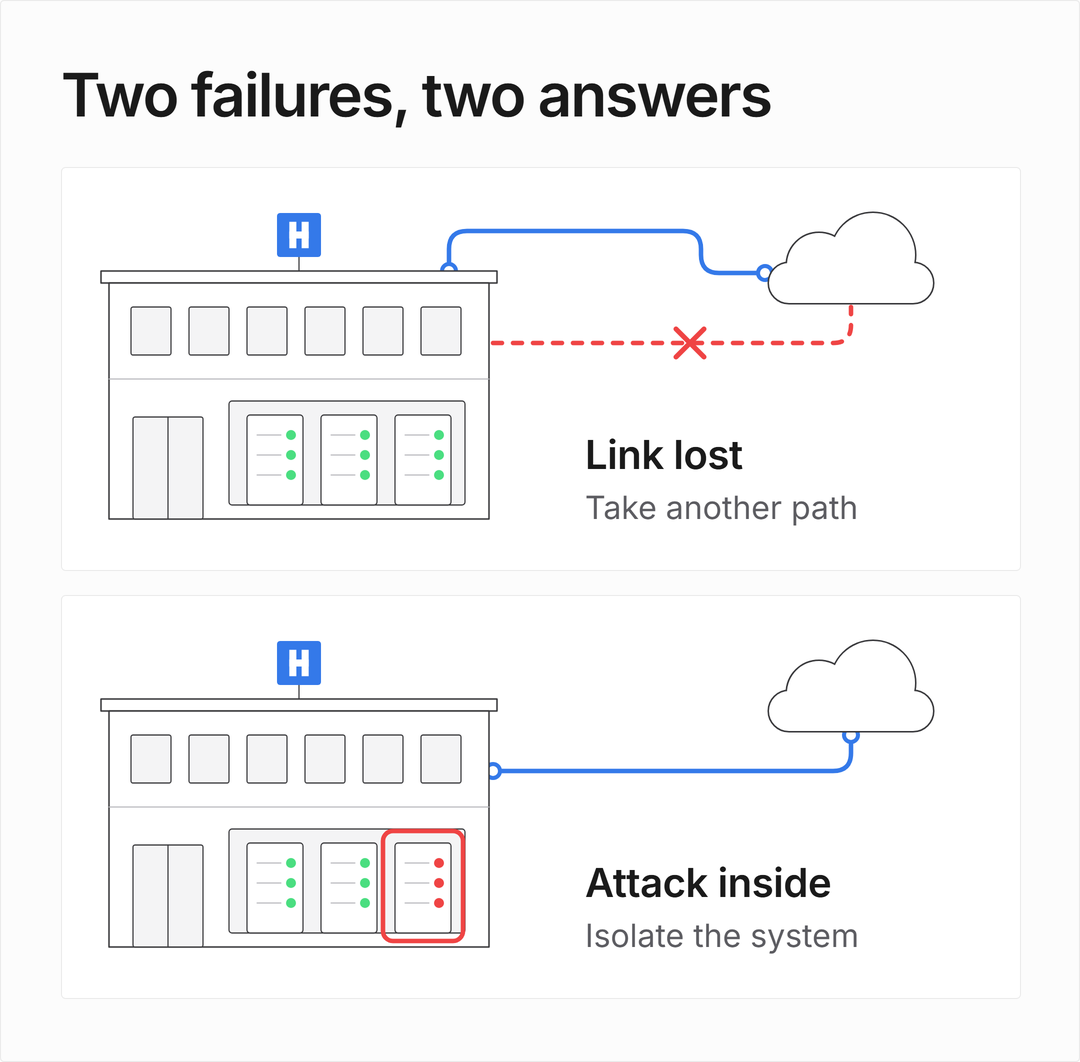
The response depends on what failed. A 911 dispatcher using AI-assisted translation may need an alternative communications path or local capability when the primary connection fails. A school district responding to ransomware may need to keep affected systems isolated until they can be safely restored.
A backup connection may help during a network outage, while local computing and data can allow certain services to continue without access to the cloud. A power failure calls for backup electricity. Recovering from a cyberattack may require isolated copies of critical information and careful verification before systems are brought back online.
Many hospitals, public-safety organizations, and other essential service providers already have backup systems and downtime procedures in place. The question is whether those protections cover the dependencies that matter most.
Before investing in more infrastructure, operators need to understand where their existing protections fall short and what would actually improve service continuity.
Put resilience to the test
Organizations also need to know whether their continuity plans will work in practice. A hospital, for example, could simulate a four-hour loss of external connectivity to see whether clinicians can still access the patient information they need. Before the exercise, clinical and technical teams would agree on which functions must remain available and what level of disruption is acceptable.
During the exercise, teams should record which functions remain available, which become limited or unavailable, how long local operations can last, and who takes charge. They must also test whether information recorded during the outage can be reconciled and normal service restored safely.
Testing against different types of disruption gives organizations a clear picture of their vulnerabilities and the evidence they need to make informed infrastructure investments.
The future depends on what keeps working
The infrastructure being built today will serve communities for decades, as AI takes on a larger role in healthcare, public safety, education, and other essential services. Decisions about where computing and data reside, how services continue locally, and how they recover will shape what communities can rely on.
Continuity and recovery belong in those decisions from the start. We should know which functions can survive a lost connection, what remains available locally, and what it takes to restore the full service.
The infrastructure behind those services must deliver what people need, when and where they need it, in blue skies or gray.
Hypercube
Modular data centers hardened for the conditions that take ordinary infrastructure offline.