


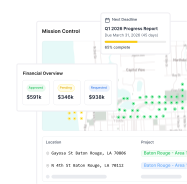


Broadband Feasibility Study

A Broadband Feasibility Study evaluates the availability and quality of broadband Internet service provided in a given community. The Broadband Feasibility Study is used to generate a Broadband Feasibility Report that is used to provide recommendations to local leaders on how to improve the quality, availability, and adoption of broadband service. It does so by evaluating the current state of broadband infrastructure, the estimated capital and operational costs of improving access and connectivity, and the financial viability of planned or proposed projects. The key components of a Broadband Feasibility Study include:Broadband AuditBroadband Performance Data (Internet Speed Testing)Customer Satisfaction (Online Surveys)Demographic and Spatial AnalysisExisting Competitive Landscape Assessment (Local ISP availability)Stakeholder InterviewsPricing and Financial AnalysesNetwork Recommendations The Broadband Audit is the critical first step and principle ingredient of a Broadband Feasibility Study and offers communities the chance to win or defend their fair share of BEAD grant funding. To begin your Broadband Audit, visit here.
Critical Infrastructure Terms
#
A
B
C
D
E
F
G
I
L
M
P
R
S
T
U
Y