
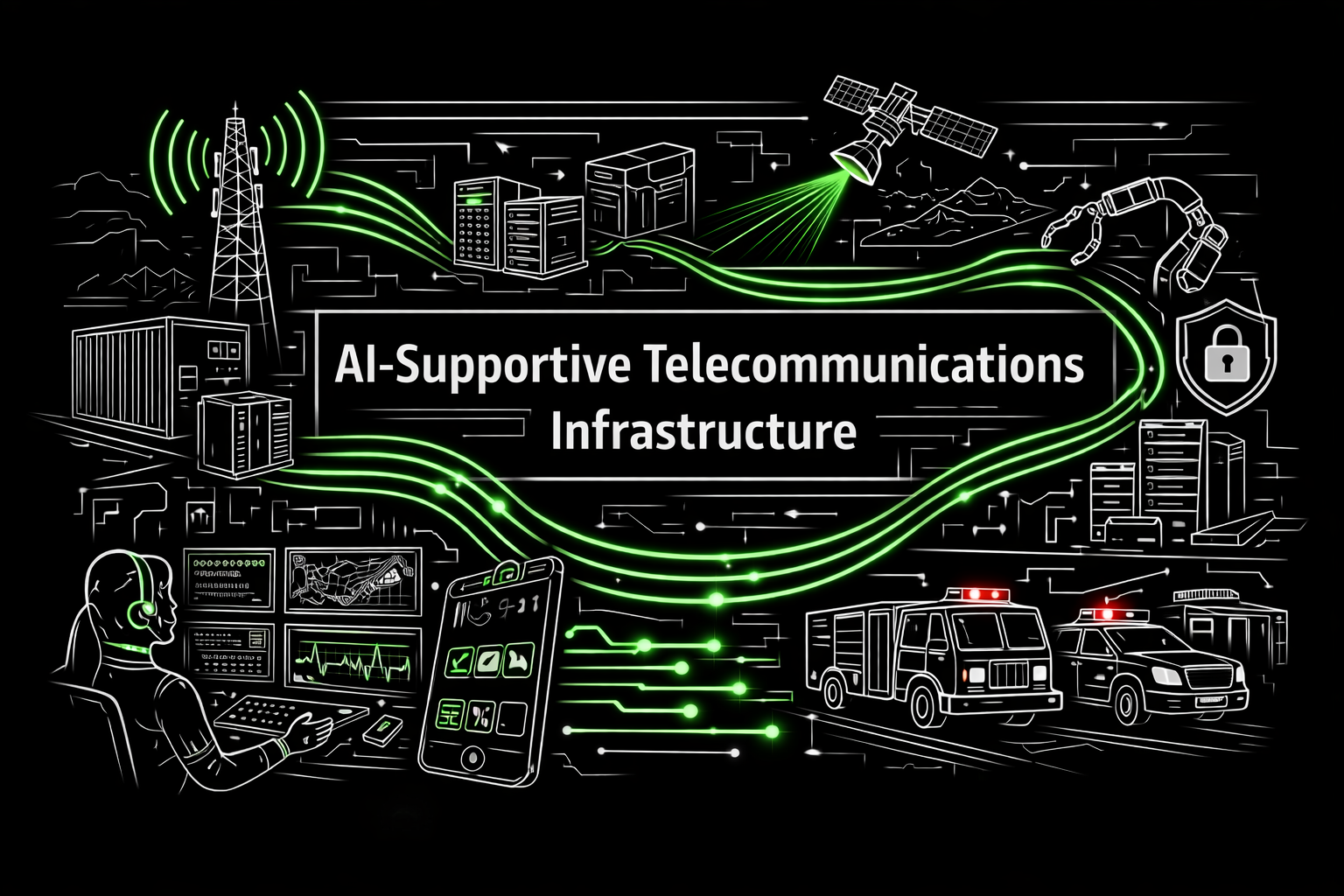
AI-Supportive Telecommunications Infrastructure
AI-supportive telecommunications infrastructure refers to high-capacity, low-latency broadband networks designed to enable artificial intelligence workloads across distributed environments. This infrastructure includes dense fiber optic networks, robust middle-mile and backbone capacity, edge data centers, and resilient interconnection facilities that support real-time data processing, machine learning inference, and large-scale data movement.
Such infrastructure underpins AI applications in areas including public safety, healthcare, transportation, energy management, and government services. Fiber-first broadband investments made under the BEAD Program contribute foundational capacity for AI-supportive networks by enabling scalable backhaul, geographic redundancy, and edge connectivity—particularly in regions where advanced digital infrastructure has historically been limited.


All glossary terms
Back to index- Administrative Expenses
- Advanced Communications Networks
- Aerial Deployment
- Aerial Fiber
- Affordable Connectivity Program
- AI Edge Node
- Alternative Connection Paths (Network Resilience)
- American Rescue Plan Act
- Annual Outage Allowance
- Application Model
- Area Challenge Module
- Assassin's Maces
- Assassin's Maces (杀手锏, Shashoujian)
- Asymmetric
- Autonomous Recovery
- Average Revenue Per User
- BABA Whitelist Compliant Equipment
- Backbone
- Bandwidth
- BEAD Grant Cybersecurity Requirements
- BEAD Supporting Funds
- BEAD Timelines
- Benefit of the Bargain Analysis
- Bit
- Blended Domains
- Border Gateway Protocol
- Broadband
- Broadband Audit
- Broadband Deployment Accuracy and Technological Availability Act
- Broadband Deployment Accuracy and Technological Availability Act Maps
- Broadband Equity, Access, and Deployment II
- Broadband Equity, Access and Deployment Program
- Broadband Feasibility Study
- Broadband Initiatives Program
- Broadband Serviceable Locations
- Broadband Technology Opportunities Program
- Budget Period
- Build America Buy America
- Bulk Fabric Challenge
- Buried Fiber
- Cable Internet
- Capital Expenditures
- Capital Projects Program
- Capital Structure
- CareerTech
- Carrier-Neutral Infrastructure
- Cascading Failure
- Census Block
- Census Block Group
- Certified Community Behavioral Health Clinic
- Challenge Process
- Clawback Provisions
- Closed-Loop Referral Platform
- Coaxial Cable
- Common Equity Stock
- Commonly Accepted Standards (Telecom Context)
- Communications Act of 1934
- Community Anchor Institution
- Community Development Financial Institution
- Community Health Worker
- Community Reinvestment Act
- Compliance Automation Platform
- Conduit Financing
- Conduit Systems and Manholes
- Connect America Fund
- Connecting Minority Communities Pilot Program
- Connectivity Profile
- Consolidated Appropriations Act of 2021
- Content Provider
- Contested Logistics
- Cooperative
- Critical Access Hospital
- Customer Premises Equipment
- Cyber and Electromagnetic Attacks
- Cybersecurity for Emergency Communications
- Cybersecurity Resilience
- Data Packet
- Davis-Bacon Act (for BEAD)
- Debt/EBITDA
- Debt-Service Ratio Coverage
- Demand Point Passed
- Digital Canyon
- Digital Contested Logistics
- Digital Equity
- Digital Equity Act Programs
- Digital Infrastructure
- Digital Infrastructure as a Strategic Target
- Digital Sovereignty
- Digital Subscriber Line
- Digital Twin Infrastructure Mapping
- Direct Network Interconnection (Edge AI Context)
- Earnings Before Interest Taxes Depreciation and Amortization
- Economic Development Incentive
- Edge Computing Readiness
- Electromagnetic Pulse Resistant Enclosures
- Electronic Health Record
- Eligible Community Anchor Institution
- Eligible Entity
- Emergency Communications Center
- Emergency Services IP Network
- EMS Centralization
- Enterprise Value
- Equity
- Ethernet Cable
- Fabric
- False Confidence Paradox
- FCC Registration Number
- Feasibility Study
- Federal Communications Commission
- Federal Facilities Connectivity Requirements
- Federally Qualified Health Center
- Fiber
- Fiber-to-the-Curb
- Fiber-to-the-Home
- Fiber to the home/premises/curb/node
- Fiber-to-the-Node
- Fiber-to-the-Premises
- Final Proposal
- Final Proposal Submission
- Five-Year Action Plan
- Force Majeure Documentation Standard
- Formula Grant
- Future Computing Technologies
- Incumbent and Competitive Local Exchange Carriers
- Indefeasible Right of Use
- Indian Tribe
- Industrial Revenue Bonds
- Infrastructure Hardening ROI
- Infrastructure Investment & Jobs Act
- Initial Funding Availability
- Initial Proposal
- In-kind Matching Funds
- In-Line Amplifier Facilities
- Interconnectivity
- Internet Exchange Facility
- Internet Exchange Point
- Internet Protocol
- Internet Service Provider
- Interoperability
- Irrevocable Standby Letter of Credit for BEAD Grants
- Make Ready Work
- Match Capital
- Matching Funds for BEAD Grants
- Matching Requirements for Infrastructure Grants
- Medicaid
- Medication-Assisted Treatment
- Mezzanine Debt
- Micro Data Center
- Middle Mile
- Millimeter Wave
- Mission-Critical Ruggedization
- Mobile
- Mobile Wireless Communications Infrastructure on Educational Facilities
- Multi-Modality
- Multi-Modal Network
- Multiple Dwelling Unit
- Multiple Dwelling Unit Challenge Module
- Municipal Bond
- Packet Loss
- Peering and Transit Agreements
- Performance Bonds for BEAD Grants
- Performance Test & Survey
- Physical Layer Attack
- Point to Point
- Post-Quantum Cryptography
- Preferred Equity
- Preparedness and Resilience
- Presidential Fitness Test / School Wellness
- Priority Broadband Project
- Private Activity Bonds
- Program of All-Inclusive Care for the Elderly
- Project Finance
- Provider Collaborative Network
- Public-Private Partnerships
- Public Safety Answering Point
- Public Utility Company
- ReConnect Loan and Grant Program
- Reliability
- Reliable Broadband Service
- Remaining Amounts
- Remote Patient Monitoring
- Request for Initial Planning Funds
- Resilient Digital Infrastructure
- Resilient Network Architecture
- Revenue Bond
- Revolving Credit Line
- Route Server
- Rural Digital Opportunity Fund
- Rural Electrical Cooperatives
- Rural Health Transformation Program
- Rural Residency Program
- Rural Utility Service
- Satellite Internet
- Secondary Addresses
- Secured Debt
- Security
- Senior Debt
- Service Continuity During Compromise
- Simple Agreement for Future Equity
- Space Dominance and Exploration Infrastructure
- Special Award Conditions
- Speed
- Speed Test Module
- State
- State Plan Amendment
- Strategic (High Altitude) EMP
- Strategic Telecommunications Infrastructure
- Subgrantee Selection
- Subgrantee/Subrecipient
- Submarine Cable Landing Station (Carrier-Neutral)
- Subordinated Debt
- Subsidiarity
- Substance Use Disorder
- SUCCESS for BEAD Act
- Supply Chain Weaknesses
- Symmetric
- Tactical (Close Range) EMP
- Take Rate
- Taxable Debt
- Tax-Exempt Debt
- Telecommunications Act of 1996
- Telecommunications Backbone Hardening
- Telehealth
- Telehealth Portal / Kiosk
- The Good. The BEAD. The Ugly.
- Three-Legged Stool Model
- Transmission Diversity
- Tribal Broadband Connectivity Program
- Tribal Data Sovereignty
- Tribal Government
- Tribal Land
- Trust Land