
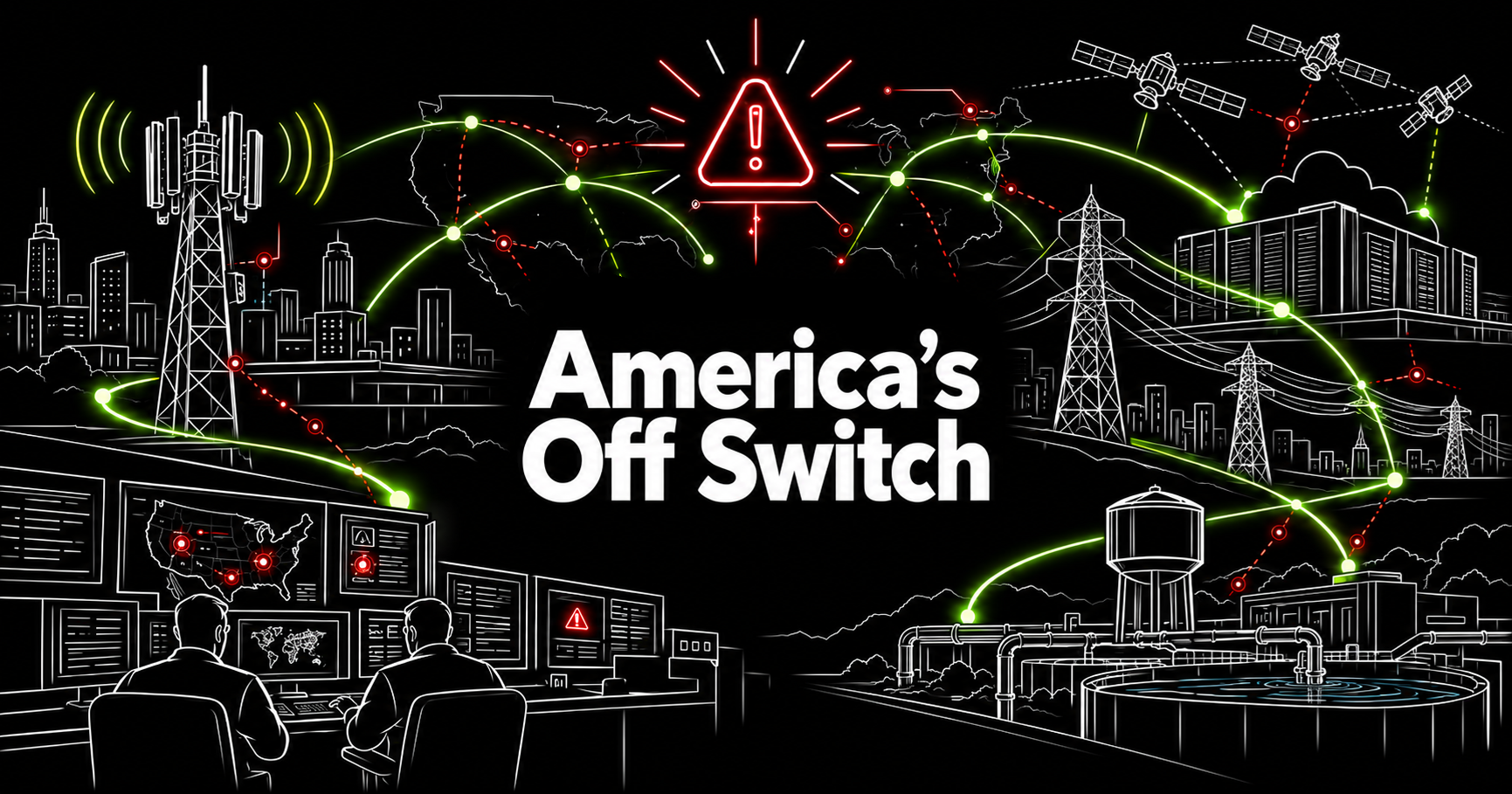
America's Off Switch
“America’s Off Switch” is an informal term for the combined set of vulnerabilities that would let an adversary disable large parts of U.S. digital and physical infrastructure at once. That includes broadband, telecommunications, cloud computing, the power grid, water systems, and navigation and timing services. The term reflects a shift in how national security officials describe the threat. The concern is no longer a single dramatic attack. It is an adversary that quietly places access inside many systems ahead of time and then triggers them all together during a crisis.
The idea gained wide attention in early 2024. U.S. agencies disclosed that the PRC state-sponsored group known as Volt Typhoon had been hiding inside the networks of U.S. communications, energy, transportation, and water operators, in some cases for at least five years. The intrusions were not built for espionage. CISA, the NSA, and the FBI assessed that the actors were pre-positioning to disrupt or destroy critical services if a conflict broke out, such as one over Taiwan. FBI Director Christopher Wray told Congress in January 2024 that Chinese hackers were positioning themselves on U.S. infrastructure so they could cause real-world harm to American communities whenever Beijing chose to act.
The “switch” is not one device or one network. It is the total of hidden access, concentrated chokepoints, and interdependent systems. When those are activated together, they can cause cascading failures that go far beyond the damage of any single attack.
Components of the Off Switch
- Pre-positioned Network Access —
Intrusions like Volt Typhoon use “living off the land” techniques. The attackers use legitimate administrative tools and compromised small-office routers to blend in with normal traffic and avoid detection. The goal is persistence: access that stays dormant until it is needed.
- Telecommunications Compromise —
In 2024, the group known as Salt Typhoon was found to have breached several major U.S. carriers, including systems used for lawful intercept. Access to carrier core networks could let an adversary watch, degrade, or cut off communications for government, emergency services, and the public.
- Physical Chokepoints —
A small number of facilities carry a large share of traffic and power. These include submarine cable landing stations, internet exchange points, dense data center clusters, and large power transformers, which can take a year or more to replace. Damage to submarine cables near Taiwan and in the Baltic Sea in recent years has shown how exposed these links are.
- Supply Chain Dependencies —
Network equipment, modules, and grid-connected devices made by companies subject to foreign government control can carry hidden functions or update paths. In 2025, reports of undocumented communication components in some imported solar inverters raised concerns about remote disablement of energy equipment.
- Systemic Interdependence —
Broadband depends on power, power depends on communications, and both depend on GPS timing. Because of this, disabling one sector can bring down others. A regional outage can spread nationally if there is no redundancy and no ability to fail gracefully.
Why It Matters for Broadband and Infrastructure Providers
Rural broadband providers, electric cooperatives, municipal utilities, and water systems are often the easiest entry points. They usually have small security teams, older equipment, and flat networks, yet they connect to larger regional and national systems. Every unhardened network adds to the reach of the off switch. Every resilient one takes something away from it.
Countermeasures
- Network hardening and segmentation — to stop lateral movement from IT systems into operational technology
- Threat hunting — for persistent, dormant access, not only active incidents
- Replacement of end-of-life routers and edge devices — that attackers commonly use as relay infrastructure
- Trusted supply chains — , including removal of covered equipment and verification of firmware and update channels
- Multi-modal transmission diversity — fiber, microwave, free-space optics, and satellite paths that fail over automatically, so cutting one medium or route doesn’t isolate a community
- Distributed, hardened edge infrastructure — modular, ruggedized enclosures that place compute, storage, and connectivity at substations, tower sites, PSAPs, and anchor institutions. This reduces reliance on a few distant data centers that make attractive targets.
- Local exchange and peering capacity — mirroring internet exchange point functions at the edge so regional traffic can keep flowing when national backbones or major exchanges are disrupted
- Grid-independent power — battery, fuel, and solar-extended backup sized to keep critical network and emergency functions running through extended outages
- Situational awareness at the site — sensor coverage across physical and electromagnetic bands to detect tampering, intrusion, and interference at unattended infrastructure
- Edge continuity for emergency services — keeping 911 call records, routing, and coordination tools available locally when links to central systems degrade
- Rapidly deployable capacity — mobile, road-towable edge cores that can restore compute and satellite-first connectivity within hours where fixed infrastructure is down
- EMP-resistant enclosures and graceful degradation — so services shrink in capacity instead of failing outright
- Incident response planning — that assumes communications and power may be down at the same time
Sources
- CISA, NSA, FBI et al. “PRC State-Sponsored Actors Compromise and Maintain Persistent Access to U.S. Critical Infrastructure.” Advisory AA24-038A, February 2024. https://www.cisa.gov/news-events/cybersecurity-advisories/aa24-038a
- Wray, Christopher. Testimony before the House Select Committee on the Strategic Competition Between the United States and the Chinese Communist Party, January 31, 2024.
- CISA and FBI. Joint statements on PRC-affiliated compromise of commercial telecommunications infrastructure (Salt Typhoon), November–December 2024.
All glossary terms
Back to index- Administrative Expenses
- Advanced Communications Networks
- Aerial Deployment
- Aerial Fiber
- Affordable Connectivity Program
- AI Edge Node
- AI-Supportive Telecommunications Infrastructure
- Alternative Connection Paths (Network Resilience)
- American Rescue Plan Act
- Annual Outage Allowance
- Application Model
- Area Challenge Module
- Assassin's Maces
- Assassin's Maces (杀手锏, Shashoujian)
- Asymmetric
- Autonomous Recovery
- Average Revenue Per User
- BABA Whitelist Compliant Equipment
- Backbone
- Bandwidth
- BEAD Grant Cybersecurity Requirements
- BEAD Supporting Funds
- BEAD Timelines
- Benefit of the Bargain Analysis
- Bit
- Blended Domains
- Border Gateway Protocol
- Broadband
- Broadband Audit
- Broadband Deployment Accuracy and Technological Availability Act
- Broadband Deployment Accuracy and Technological Availability Act Maps
- Broadband Equity, Access, and Deployment II
- Broadband Equity, Access and Deployment Program
- Broadband Feasibility Study
- Broadband Initiatives Program
- Broadband Serviceable Locations
- Broadband Technology Opportunities Program
- Budget Period
- Build America Buy America
- Bulk Fabric Challenge
- Buried Fiber
- Cable Internet
- Capital Expenditures
- Capital Projects Program
- Capital Structure
- CareerTech
- Carrier-Neutral Infrastructure
- Cascading Failure
- Census Block
- Census Block Group
- Certified Community Behavioral Health Clinic
- Challenge Process
- Clawback Provisions
- Closed-Loop Referral Platform
- Coaxial Cable
- Common Equity Stock
- Commonly Accepted Standards (Telecom Context)
- Communications Act of 1934
- Community Anchor Institution
- Community Development Financial Institution
- Community Health Worker
- Community Reinvestment Act
- Compliance Automation Platform
- Conduit Financing
- Conduit Systems and Manholes
- Connect America Fund
- Connecting Minority Communities Pilot Program
- Connectivity Profile
- Consolidated Appropriations Act of 2021
- Content Provider
- Contested Logistics
- Cooperative
- Critical Access Hospital
- Customer Premises Equipment
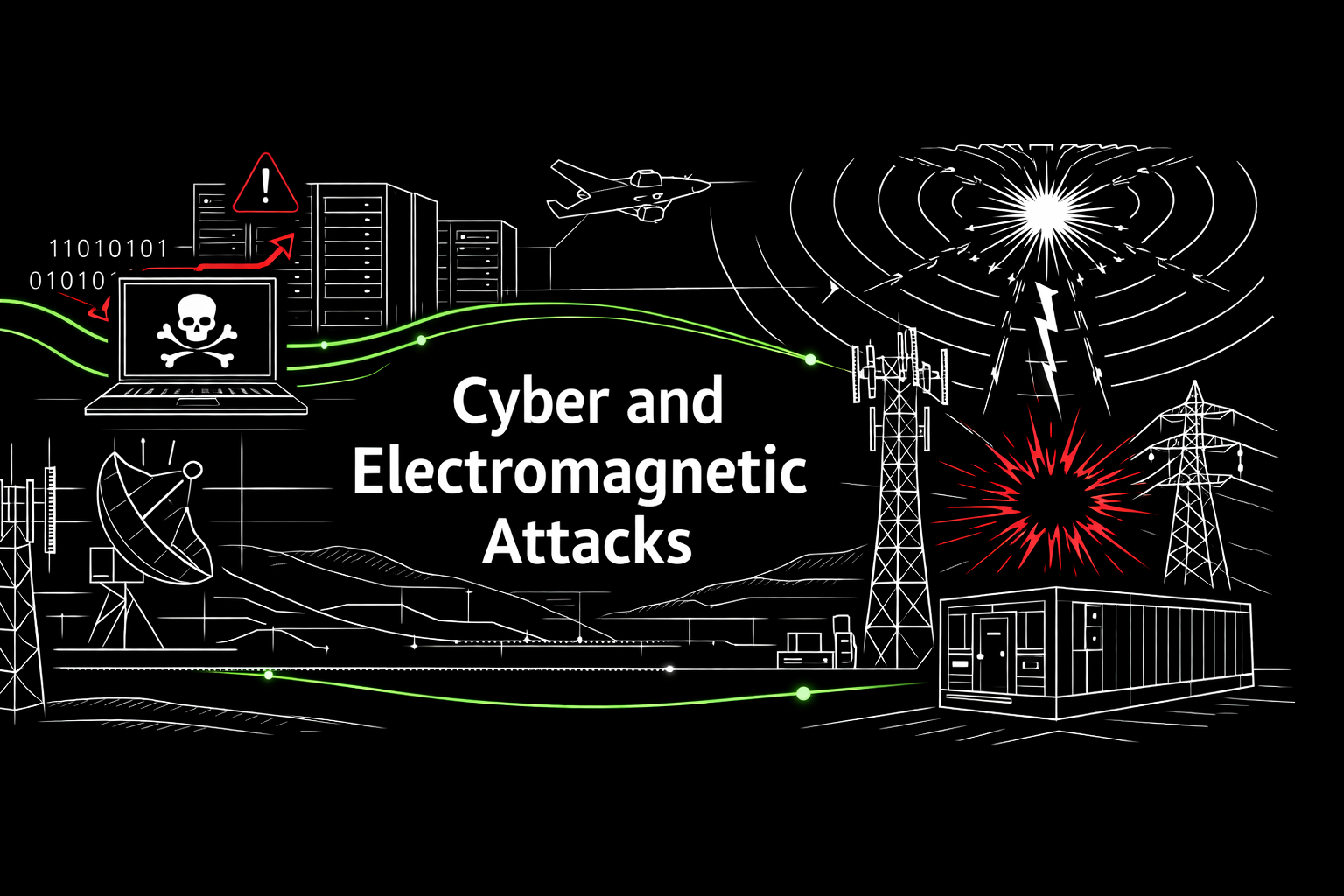
- Cyber and Electromagnetic Attacks
- Cybersecurity for Emergency Communications
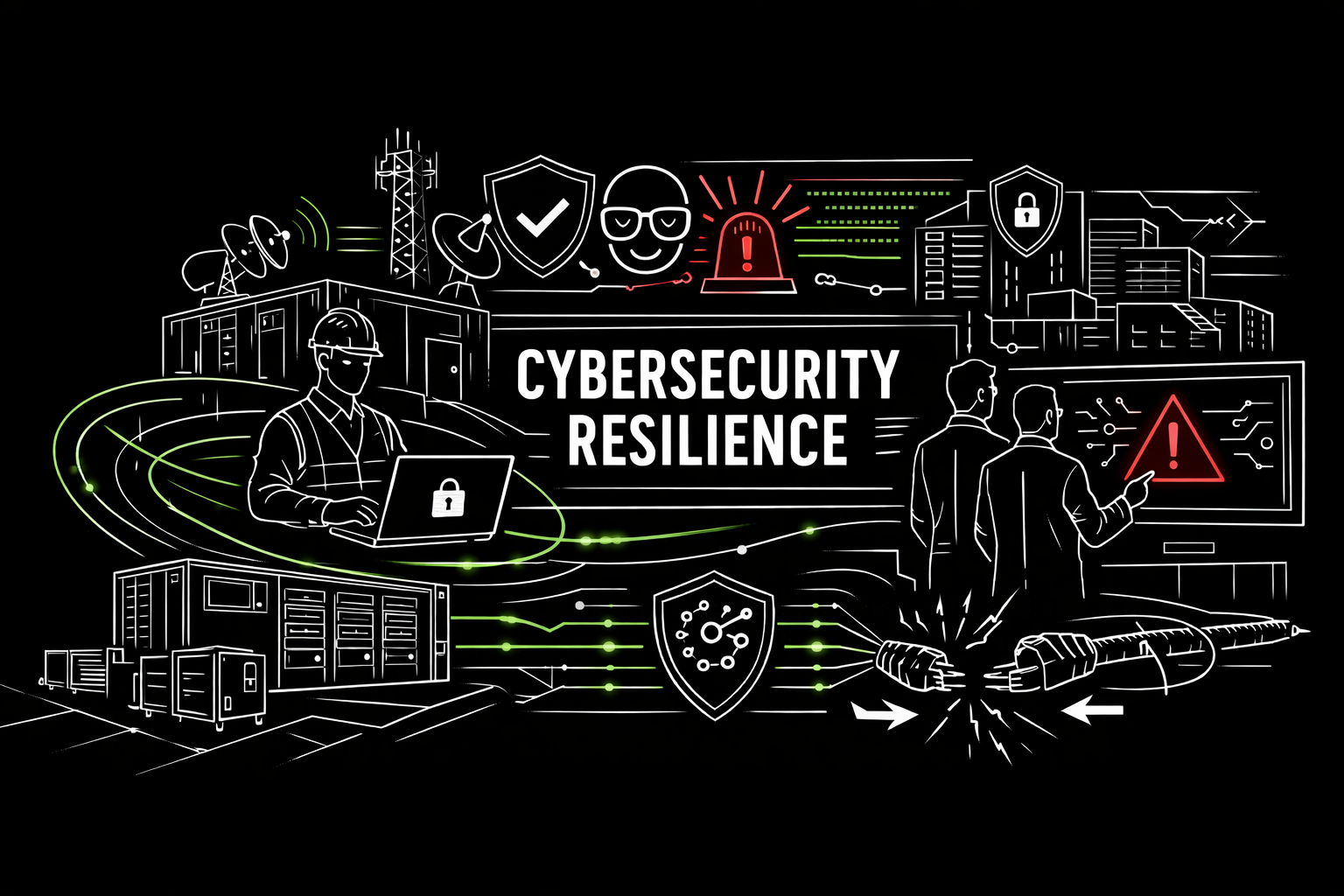
- Cybersecurity Resilience
- Data Packet
- Davis-Bacon Act (for BEAD)
- Debt/EBITDA
- Debt-Service Ratio Coverage
- Demand Point Passed
- Digital Canyon
- Digital Contested Logistics
- Digital Equity
- Digital Equity Act Programs
- Digital Infrastructure
- Digital Infrastructure as a Strategic Target
- Digital Sovereignty
- Digital Subscriber Line
- Digital Twin Infrastructure Mapping
- Direct Network Interconnection (Edge AI Context)
- Earnings Before Interest Taxes Depreciation and Amortization
- Economic Development Incentive
- Edge Computing Readiness
- Electromagnetic Pulse Resistant Enclosures
- Electronic Health Record
- Eligible Community Anchor Institution
- Eligible Entity
- Emergency Communications Center
- Emergency Services IP Network
- EMS Centralization
- Enterprise Value
- Equity
- Ethernet Cable
- Fabric
- False Confidence Paradox
- FCC Registration Number
- Feasibility Study
- Federal Communications Commission
- Federal Facilities Connectivity Requirements
- Federally Qualified Health Center
- Fiber
- Fiber-to-the-Curb
- Fiber-to-the-Home
- Fiber to the home/premises/curb/node
- Fiber-to-the-Node
- Fiber-to-the-Premises
- Final Proposal
- Final Proposal Submission
- Five-Year Action Plan
- Force Majeure Documentation Standard
- Formula Grant
- Future Computing Technologies
- Incumbent and Competitive Local Exchange Carriers
- Indefeasible Right of Use
- Indian Tribe
- Industrial Revenue Bonds
- Infrastructure Hardening ROI
- Infrastructure Investment & Jobs Act
- Initial Funding Availability
- Initial Proposal
- In-kind Matching Funds
- In-Line Amplifier Facilities
- Interconnectivity
- Internet Exchange Facility
- Internet Exchange Point
- Internet Protocol
- Internet Service Provider
- Interoperability
- Irrevocable Standby Letter of Credit for BEAD Grants
- Make Ready Work
- Match Capital
- Matching Funds for BEAD Grants
- Matching Requirements for Infrastructure Grants
- Medicaid
- Medication-Assisted Treatment
- Mezzanine Debt
- Micro Data Center
- Middle Mile
- Millimeter Wave
- Mission-Critical Ruggedization
- Mobile
- Mobile Wireless Communications Infrastructure on Educational Facilities
- Multi-Modality
- Multi-Modal Network
- Multiple Dwelling Unit
- Multiple Dwelling Unit Challenge Module
- Municipal Bond
- Packet Loss
- Peering and Transit Agreements
- Performance Bonds for BEAD Grants
- Performance Test & Survey
- Physical Layer Attack
- Point to Point
- Post-Quantum Cryptography
- Preferred Equity
- Preparedness and Resilience
- Presidential Fitness Test / School Wellness
- Priority Broadband Project
- Private Activity Bonds
- Program of All-Inclusive Care for the Elderly
- Project Finance
- Provider Collaborative Network
- Public-Private Partnerships
- Public Safety Answering Point
- Public Utility Company
- ReConnect Loan and Grant Program
- Reliability
- Reliable Broadband Service
- Remaining Amounts
- Remote Patient Monitoring
- Request for Initial Planning Funds
- Resilient Digital Infrastructure
- Resilient Network Architecture
- Revenue Bond
- Revolving Credit Line
- Route Server
- Rural Digital Opportunity Fund
- Rural Electrical Cooperatives
- Rural Health Transformation Program
- Rural Residency Program
- Rural Utility Service
- Satellite Internet
- Secondary Addresses
- Secured Debt
- Security
- Senior Debt
- Service Continuity During Compromise
- Simple Agreement for Future Equity
- Space Dominance and Exploration Infrastructure
- Special Award Conditions
- Speed
- Speed Test Module
- State
- State Plan Amendment
- Strategic (High Altitude) EMP
- Strategic Telecommunications Infrastructure
- Subgrantee Selection
- Subgrantee/Subrecipient
- Submarine Cable Landing Station (Carrier-Neutral)
- Subordinated Debt
- Subsidiarity
- Substance Use Disorder
- SUCCESS for BEAD Act
- Supply Chain Weaknesses
- Symmetric
- Tactical (Close Range) EMP
- Take Rate
- Taxable Debt
- Tax-Exempt Debt
- Telecommunications Act of 1996
- Telecommunications Backbone Hardening
- Telehealth
- Telehealth Portal / Kiosk
- The Good. The BEAD. The Ugly.
- Three-Legged Stool Model
- Transmission Diversity
- Tribal Broadband Connectivity Program
- Tribal Data Sovereignty
- Tribal Government
- Tribal Land
- Trust Land